In a two-bedroom flat in Pangani, toys have found their way into every room: under the sofa, behind the door, across the dining table. One afternoon of sorting, and a few minutes a day after that, can bring them back to one calm corner.
The method below works with boxes and baskets you probably already have, so the main cost is the afternoon you spend on it.
How do you sort the toys first?
- Gather every toy in the house into one place, such as the middle of the sitting room.
- Make three piles: keep out, store for later and pass on.
- Check each toy is complete, and fix any that need a small repair.
- Keep out only a handful of each kind: a few books, one building toy, one pretend toy.
- Pack the store-for-later pile into boxes.
- Bag the pass-on pile and take it out of the house the same week.
Sorting goes faster with your child helping, at least for the keep-out pile. Let your child choose which toys stay out, so they feel part of the plan.
What are good low-cost storage ideas for toys?
- Cardboard boxes, labelled with a picture of what goes inside
- A kiondo basket for soft toys or blocks
- Plastic basins that slide under a bed
- A shoe organiser hung on the back of a door for small toys
- An old suitcase under the bed for the rotation boxes
- A low, steady shelf against the wall for the toys in use
Picture labels matter more than neat boxes. A 3-year-old who is still learning to read can match a drawing of a car to the box of cars.
How does toy rotation work?
Toy rotation works by keeping only some toys out and storing the rest, then swapping a few every couple of weeks. When stored toys come back, they feel new again, and the room never fills up with everything at once. In a small home, rotation is the simplest way to have both fewer toys out and plenty of variety.
| Weeks | Out on the shelf | In the rotation box |
|---|---|---|
| 1 and 2 | Blocks, picture books, the play kitchen | Puzzles, cars, art supplies |
| 3 and 4 | Puzzles, picture books, the play kitchen | Blocks, cars, art supplies |
| 5 and 6 | Cars, art supplies, the play kitchen | Blocks, puzzles, older books |
Large toys like a play kitchen stay out all the time. Rotate the smaller things around them, so the big toy stays the steady centre of play.
Where should toys live in a small home?
Toys in a small home should live in one or two play corners rather than every room. A corner of the sitting room or the child's bedroom becomes the place where toys are kept, played with and put back. Keeping play to a set area leaves the rest of the home free for grown-up life.
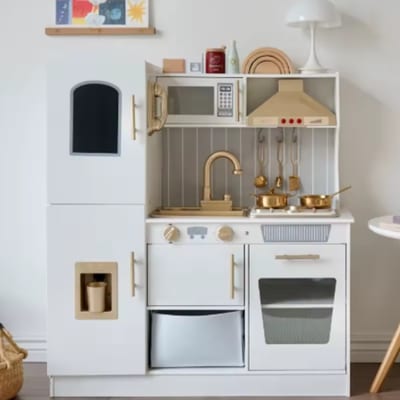
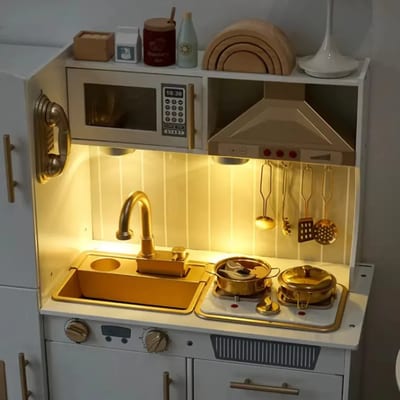
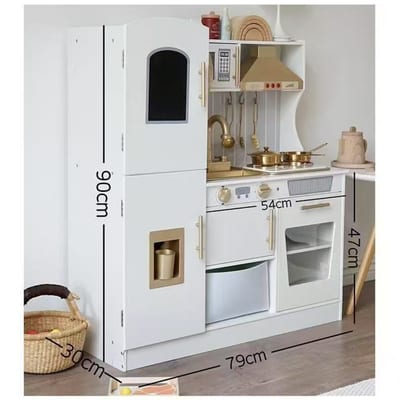
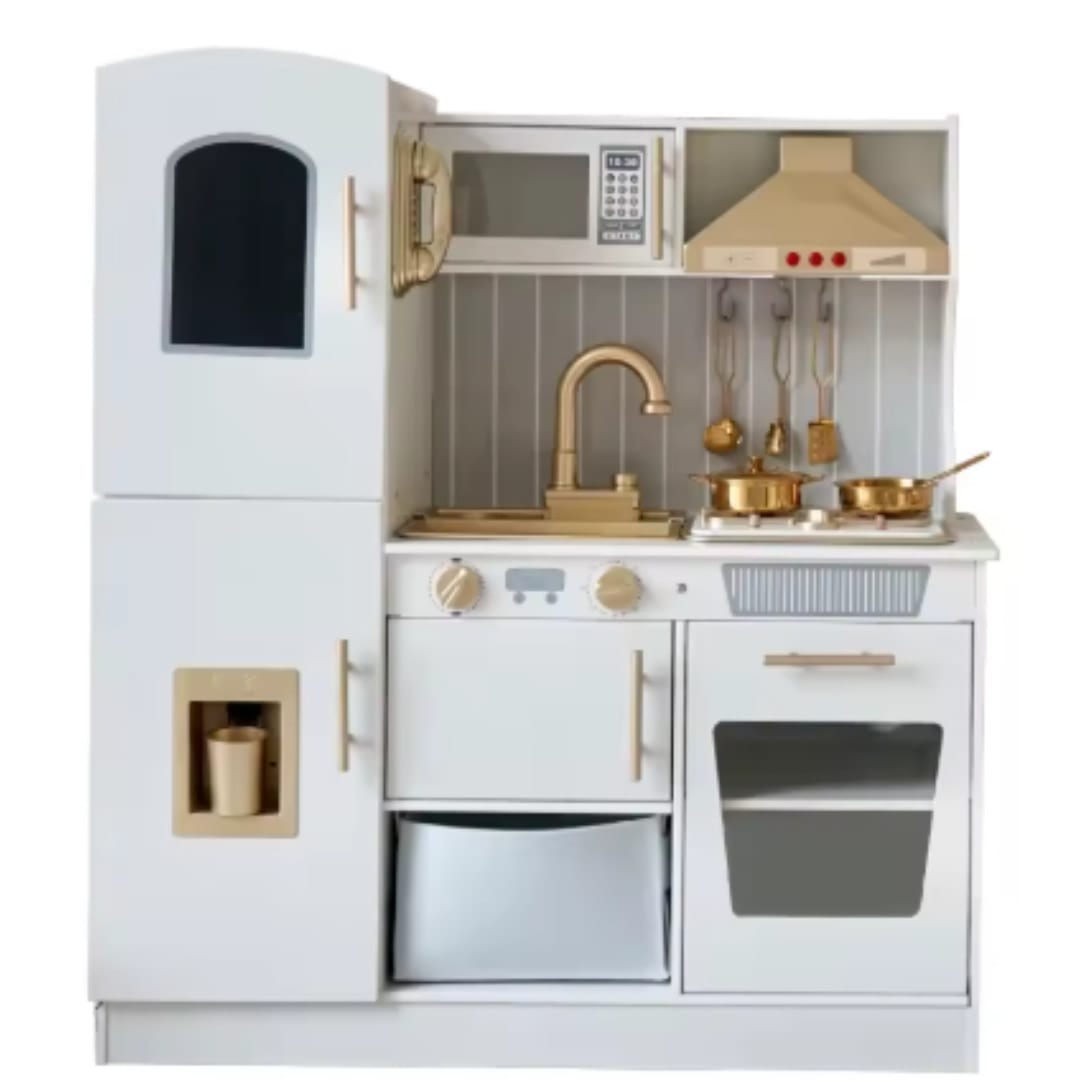
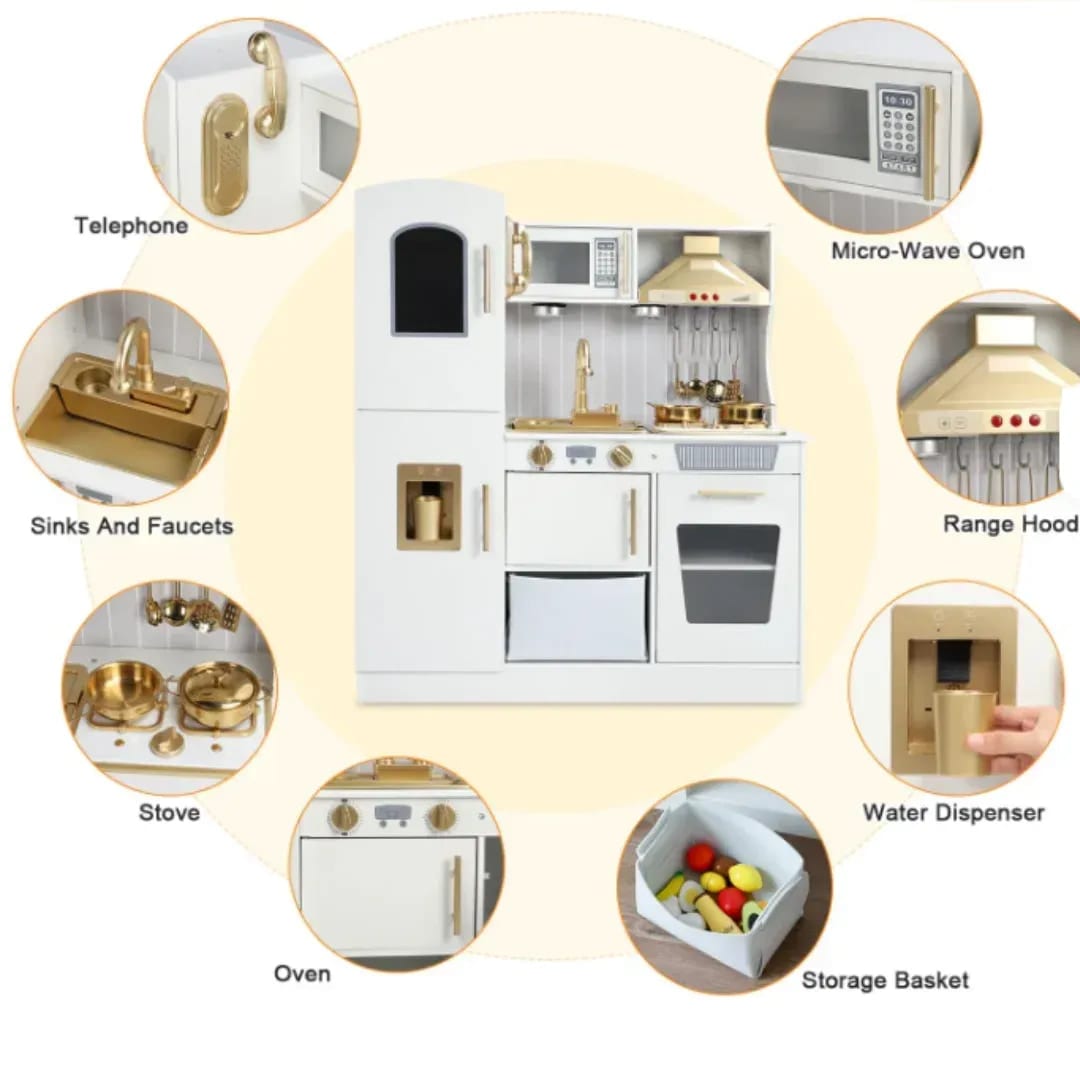
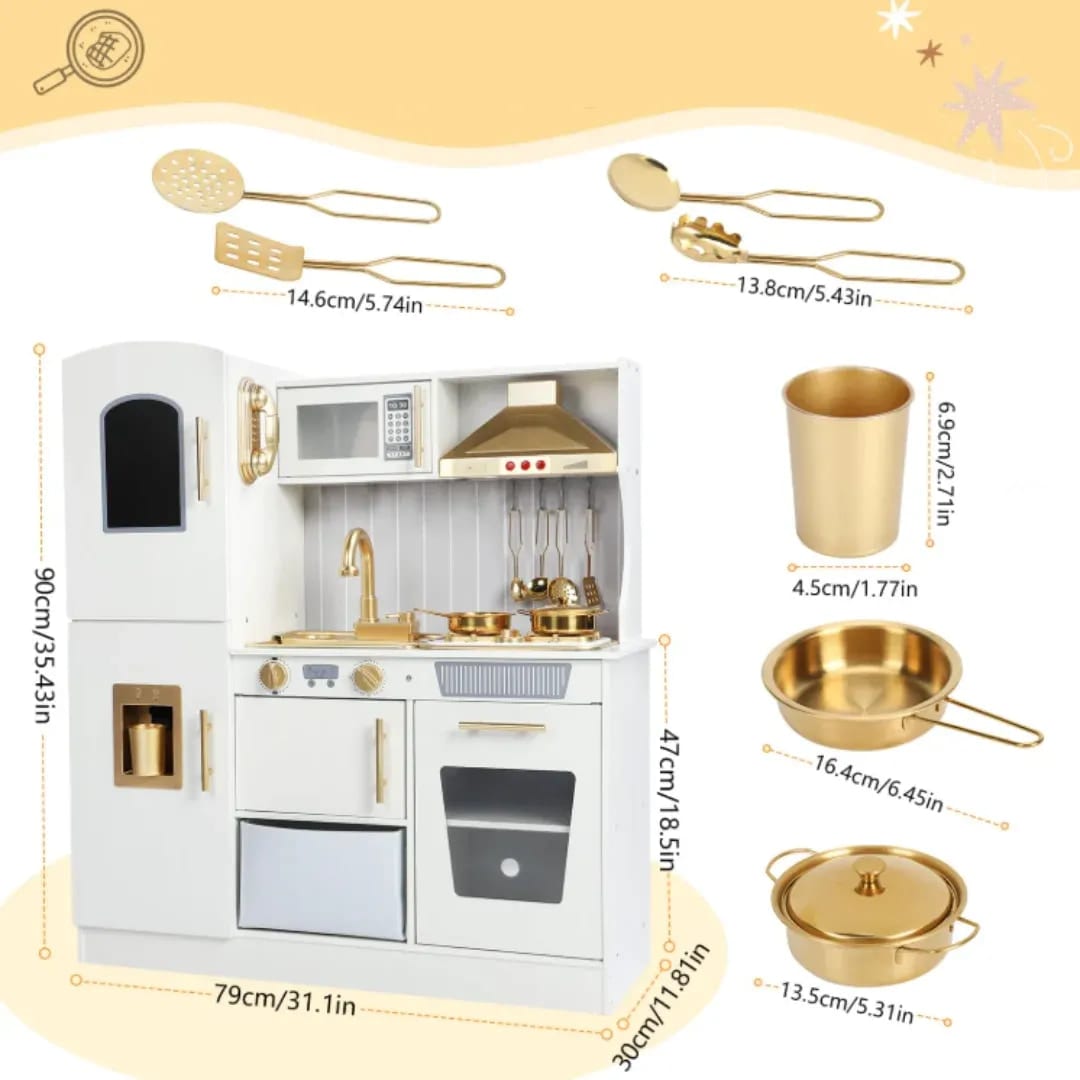
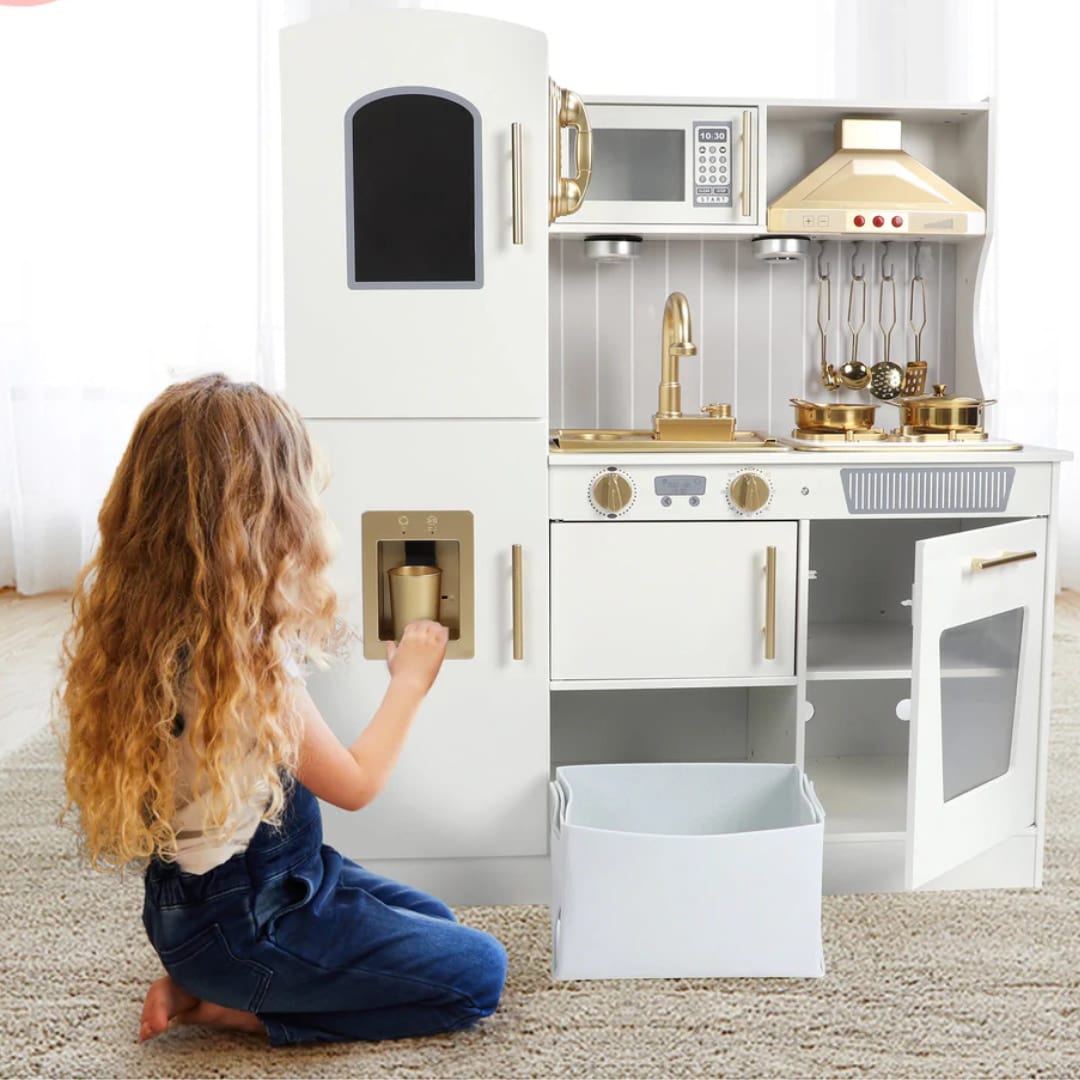
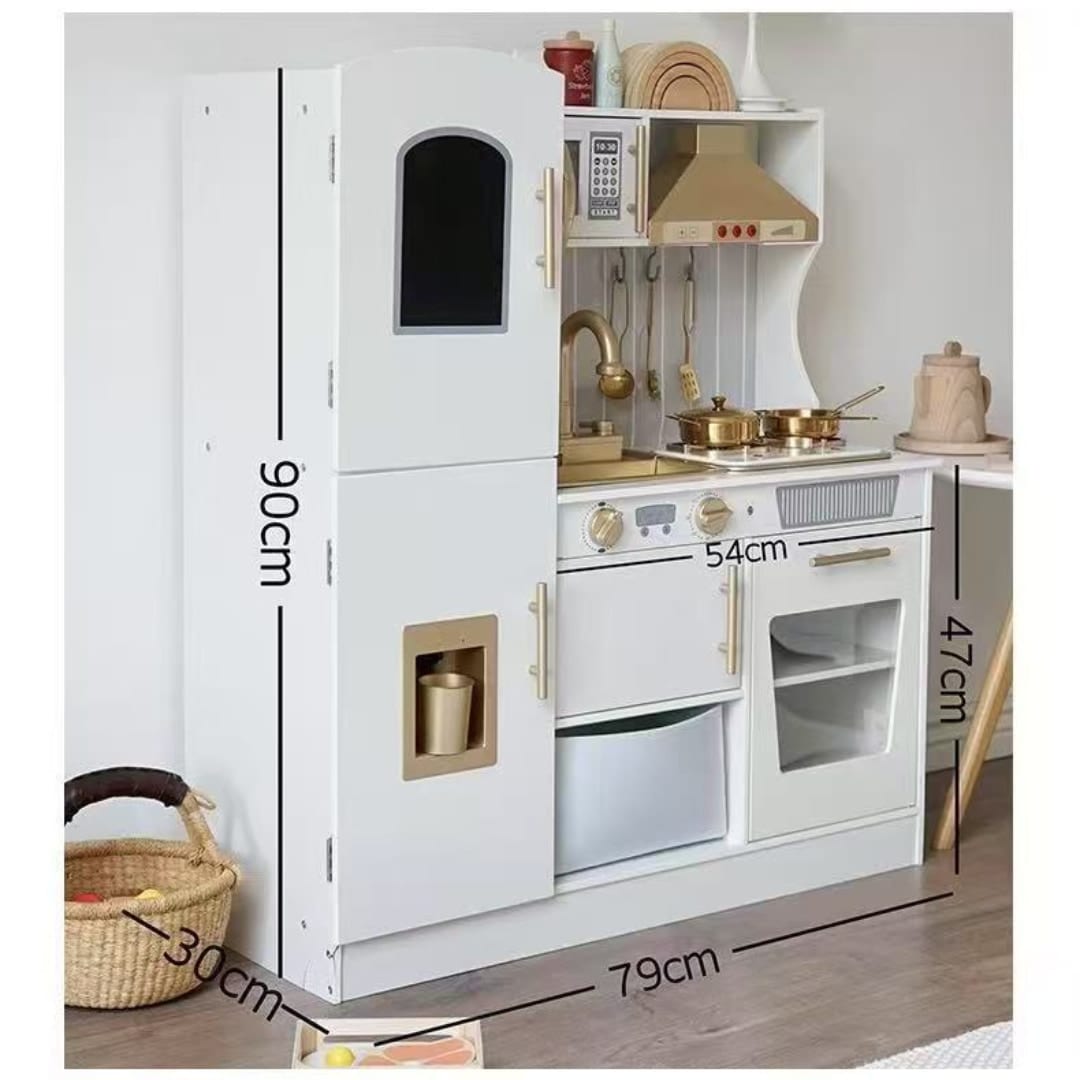
If you have a play kitchen, make it the centre of one play corner. Its cupboards and basket hold its own pots and play food, and smaller toys can sit on a shelf beside it. Our guide to fitting a kitchen set in a small flat shows where one fits room by room.
How do you get children to tidy up?
Getting children to tidy up works best when every toy has an obvious home and tidying happens at the same time each day, such as before dinner. Make it short and shared: you put away one thing, they put away the next. A song or a countdown turns it into a game.
- Tidy at the same time every day
- Keep homes for toys low enough for your child to reach
- Use picture labels on boxes and baskets
- Tidy together, especially at first
- Praise the effort, not the result
What do you do with toys children have outgrown?
Toys children have outgrown are best passed on while they are still in good condition, or stored for a younger sibling. Let your child help choose where each one goes. Giving toys away is also a good chance to talk about sharing with other children.
Keep only the outgrown toys you really plan to use again. A box of baby toys kept "just in case" takes space better used for the toys in play.
How do you share a small space between siblings?
Sharing a small space between siblings works best when each child has one shelf or one box that is only theirs, and the big toys are shared. A younger child keeps their toys on the lowest shelf, and an older child keeps small or delicate pieces up high, out of reach. Shared toys live in the middle, for everyone.
That split makes sharing easier, because each child knows what belongs to them. It also keeps small parts away from younger siblings, as the American Academy of Pediatrics advises for children under 3.
How do you keep the system going?
The system keeps going with a few minutes a day and a short reset every couple of weeks. Daily, everything goes back to its home before dinner, and your child can help by carrying one box at a time back to the shelf.
Every two weeks, swap the rotation boxes and pass on anything that is no longer played with. A home that is sorted once and kept up stays calm.
New toys from birthdays and school holidays follow one simple rule: when something new comes in, something old goes into storage or out of the house.
Frequently asked questions
How many toys should be out at once? The number of toys out at once in a small home should be small: a few books, one building toy, one pretend toy and some art supplies. The rest can wait in the rotation box.
How often should I rotate toys? Rotating toys every two weeks is a good starting rhythm. Swap a few things at a time, rather than everything at once.
Where can I store toys in a bedsitter? In a bedsitter, store toys under the bed in basins or a suitcase, behind the door in a hanging organiser, and on one low shelf in a play corner.
How do I keep the sitting room tidy with toys around? Keeping the sitting room tidy with toys around is easier with one play corner, a basket for that corner and a daily tidy-up before dinner.
What is a kiondo basket good for? A kiondo basket is good for holding soft toys, blocks or play food. It is light, easy for a child to carry and looks good in a sitting room.
How do I get my child to put toys away? Getting your child to put toys away starts with low, labelled homes for every toy and a short tidy-up at the same time each day, done together.
Should I give away toys my child doesn't play with? Giving away toys your child no longer plays with frees up space and helps another child. Let your child help decide which ones go.
Which toys should stay out all the time? The toys that should stay out all the time are the big ones that anchor play, such as a play kitchen, plus a few favourite books. Smaller toys rotate around them.