Montessori Kitchen Set in Kenya: Using It the Montessori Way at Home
What is a Montessori kitchen?
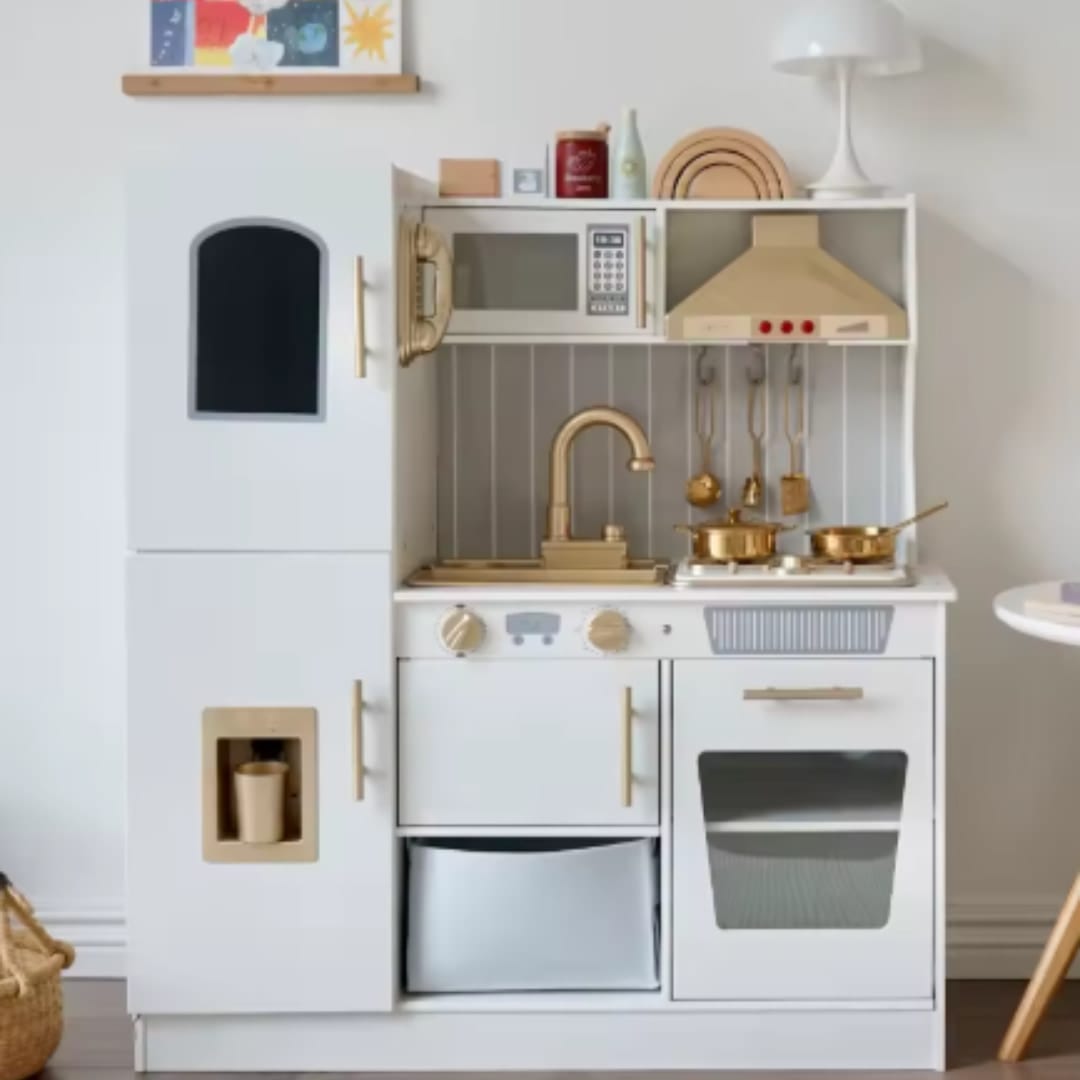
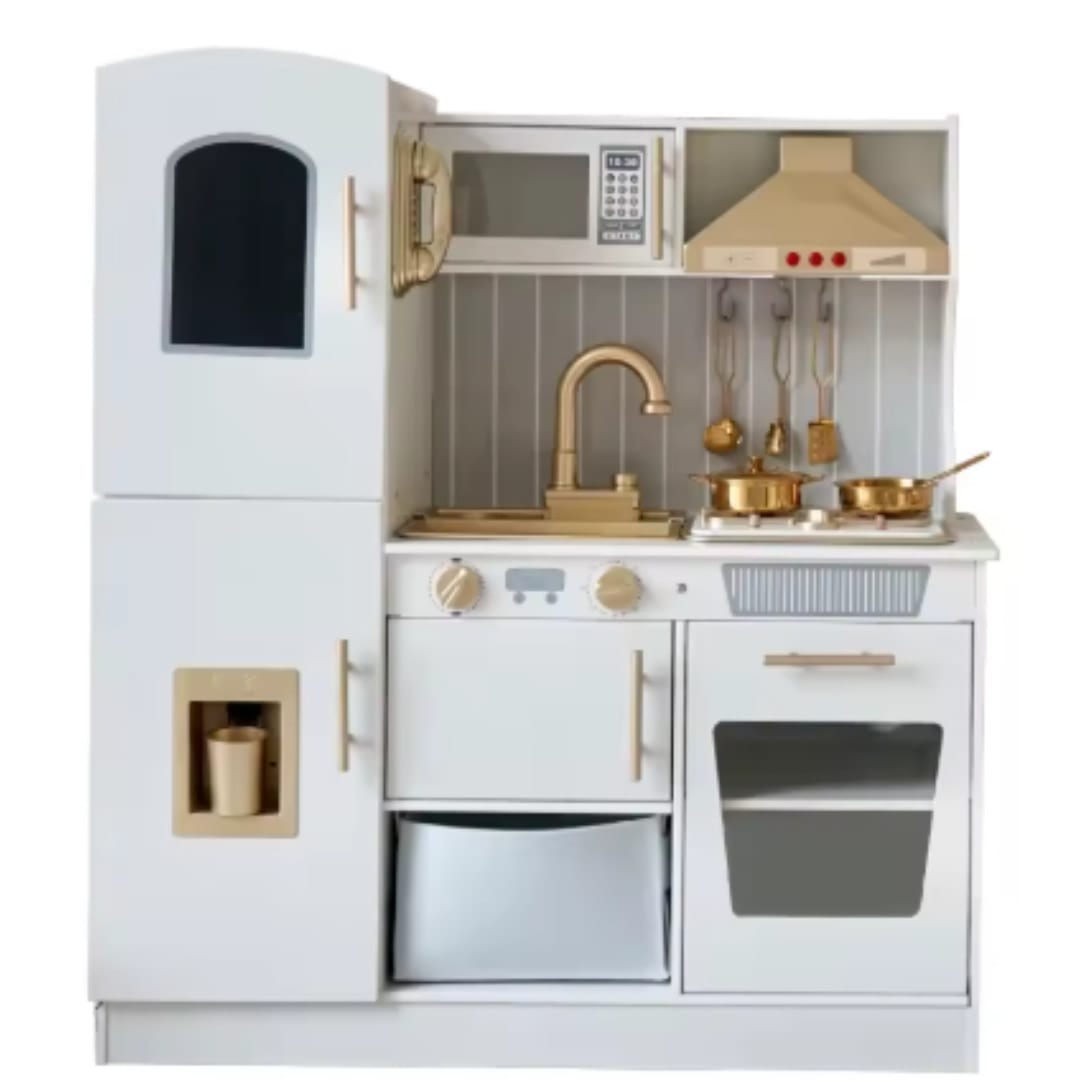
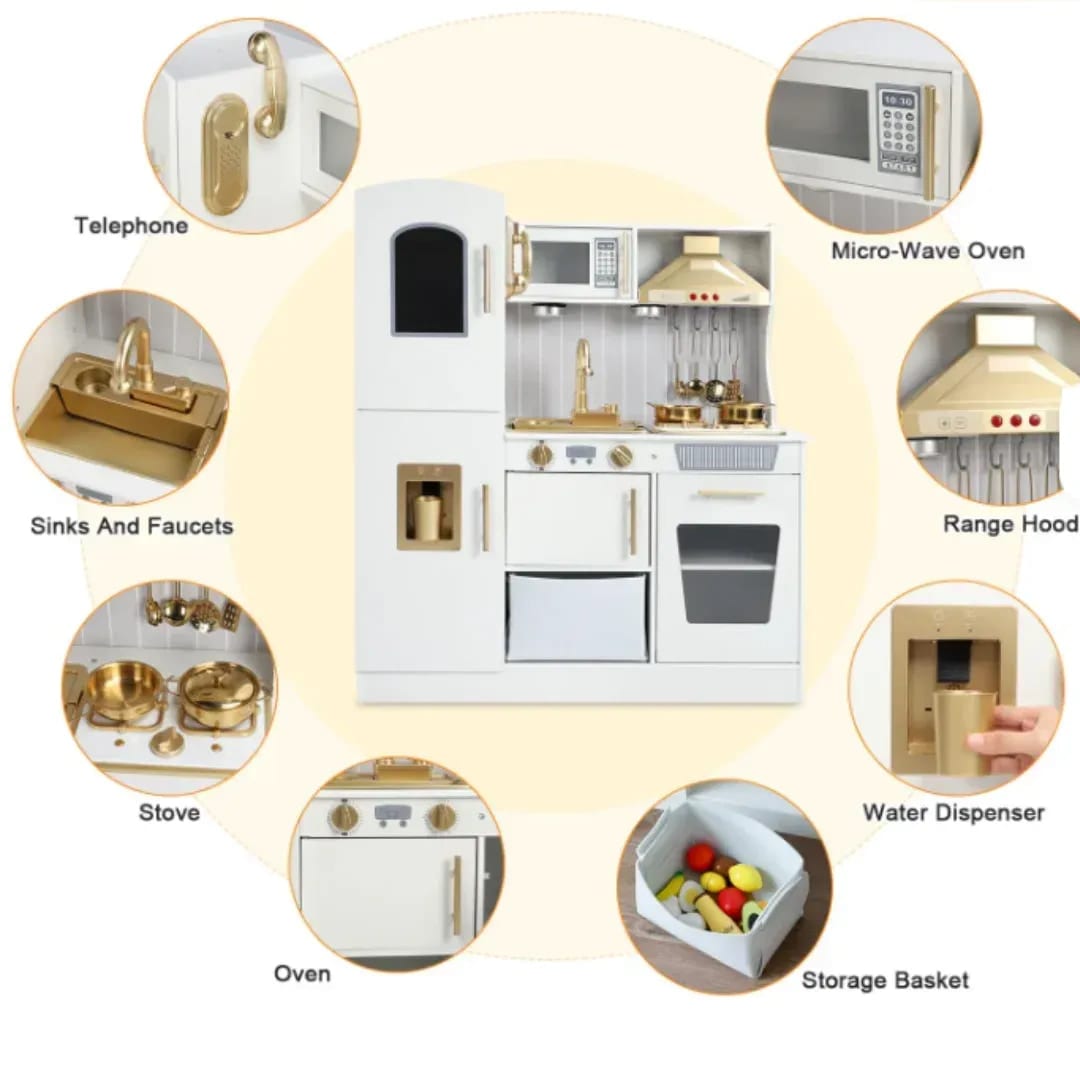
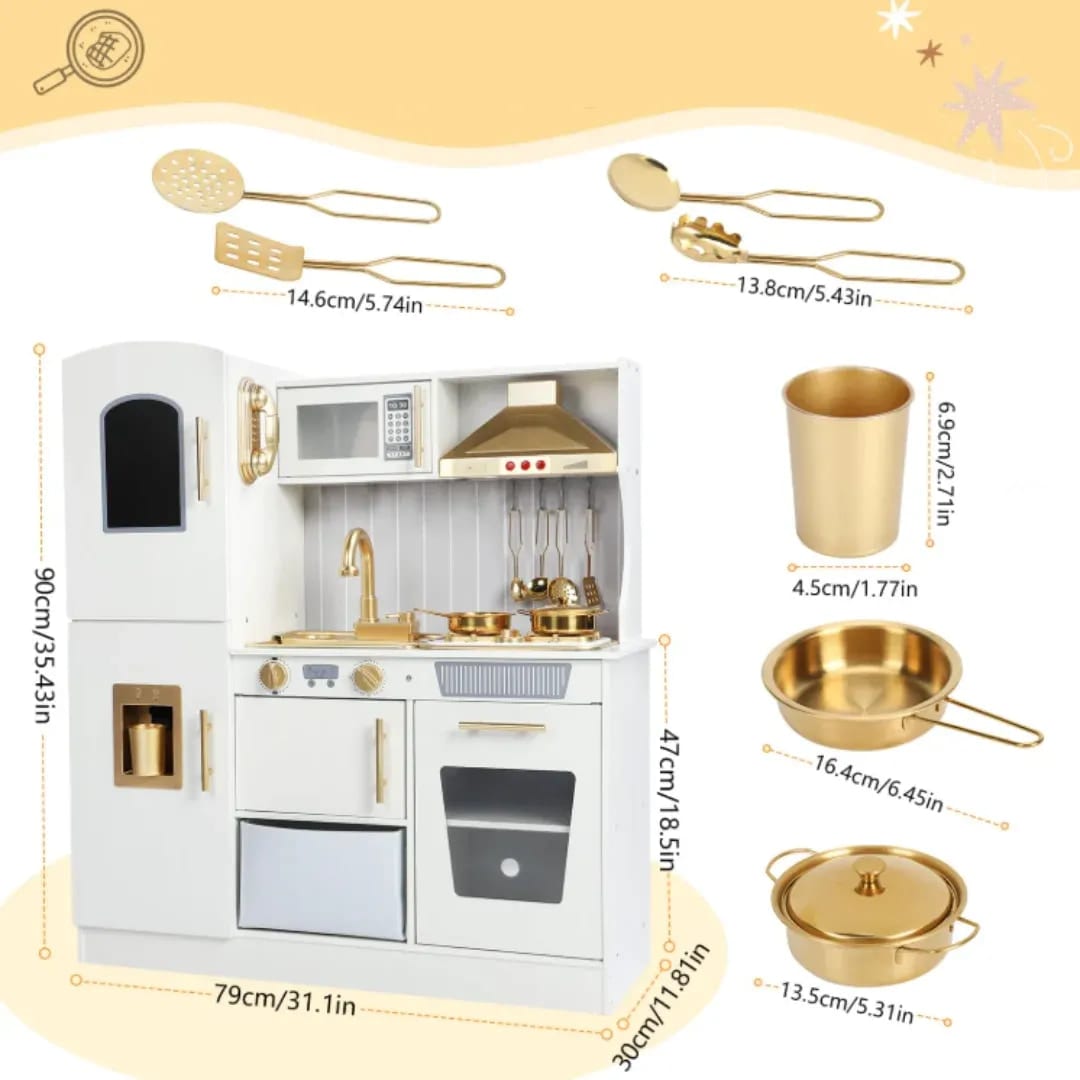
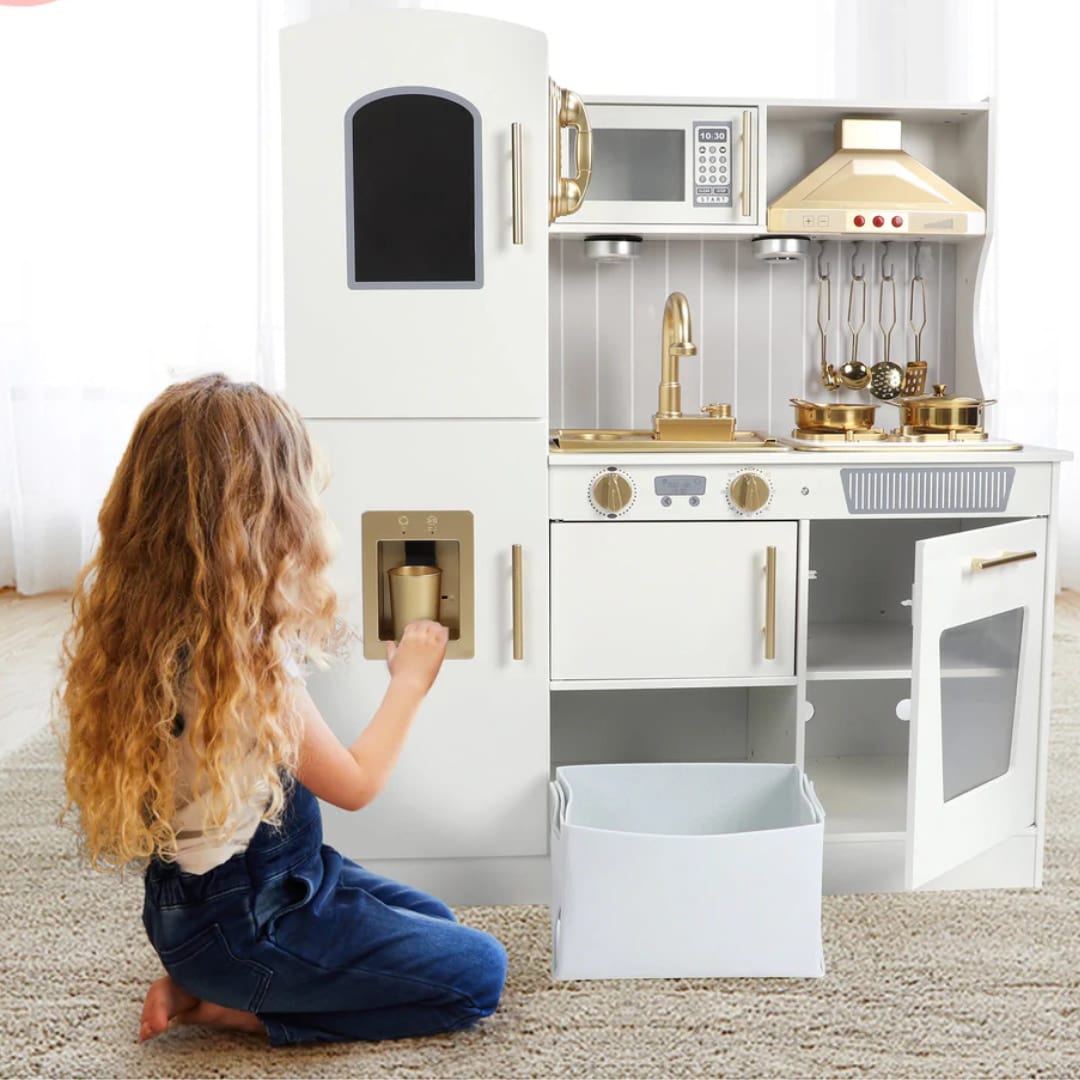
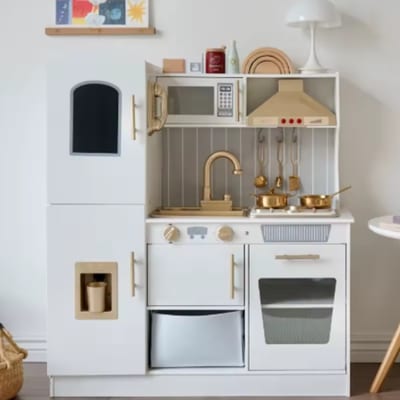
A Montessori kitchen is a child-sized kitchen arranged so a child can do real everyday tasks on their own, such as pouring water, wiping a counter and putting things away. Our wooden set works well this way: it is 90 cm high, with a sink, cupboards and a basket, for ages 3 to 8.
- KSh 18,999
- Ages 3 to 8
- Pay after delivery
- 3-hour delivery in Nairobi
- 24-hour delivery countrywide
You pay after it arrives, by cash or M-Pesa.
Updated by The Wooden Kitchen Sets team
Montessori classrooms are known for low shelves, small jugs and children who pour their own water. You can bring the same idea home with a few changes. A child-height kitchen set is a simple place to start, because it already puts a sink, a stove and cupboards within your child's reach.
| The approach | Child-led play, order and real tasks |
|---|---|
| Set-up | Fewer items, each with its own place |
| Real tasks | Pouring, wiping, sorting and washing |
| The grown-up's job | Show once, slowly, then step back |
What does Montessori-style play look like at a kitchen set?
Montessori-style play at a kitchen set looks calm and purposeful: a child chooses a task, carries it out from start to finish and puts everything back. Instead of a pile of toys, there are a few items, each with a home. The child decides what to cook or clean, and the grown-up watches more than they direct.
How do you set up the kitchen set the Montessori way?
- Put out only a few items at a time: one pot, one pan, a spoon and a little play food.
- Give each item its own place in a cupboard, on the counter or in the basket.
- Set up a small jug, a cup and a cloth on a tray beside the set for pouring practice.
- Keep the tray for the task of the day.
- Swap a few items each week so there is always something new to discover.
- Invite your child to the kitchen, then let them choose what to do.
The set's 90 cm height already does much of the work. Every part is within a 3-year-old's reach, so there is no need for a step or a stool.
Which real everyday tasks can a child practise?
- Pouring water from a small jug into a cup on the tray, and wiping up any drips
- Wiping the counter and the stove top with a barely damp cloth
- Sorting spoons and utensils into their places
- Washing a plastic cup in a basin of water on the tray
- Folding a kitchen towel and putting it away
- Setting the table for the family meal
Tasks like these come from everyday Kenyan homes. Keep the water on the tray and away from the wood, and dry the set if any splashes reach it.
Why does order matter in Montessori play?
Order matters in Montessori play because a child who knows where everything lives can finish a task without help. A cupboard for pots, a basket for food and a place for the cloth make tidying up part of the task. The set's cupboards with opening doors and its large basket give every item a clear home.
What does the grown-up do in Montessori play?
The grown-up in Montessori play shows a task once, slowly and with few words, then steps back and lets the child try. If water spills on the tray, the cloth is right there, and wiping up becomes the next task.
Stepping back is harder than it sounds. Sit nearby, and only step in when your child asks for help. The American Academy of Pediatrics describes child-led play with a caring adult close by as one of the best ways children learn.
How do Montessori ideas map onto this kitchen set?
Montessori ideas map onto this kitchen set point by point, from child-sized furniture to care of the space. Each idea in the table has a matching feature or habit at the set, so you can see how the method works at home with a few things from your own kitchen.
| Montessori idea | What it looks like at this set |
|---|---|
| Child-sized furniture | A 90 cm kitchen with every part in reach |
| Order | Cupboards and a basket, one home for each item |
| Real tasks | Pouring from a small jug on a tray, wiping the counter |
| Freedom to choose | A child picks the meal, the task and the pace |
| Care of the space | Wiping the counter and putting things back after play |
The same set suits ordinary pretend play too, so families can mix a Montessori tray in the morning with free play later.
Wooden Kitchen Set for Kids, White and Gold
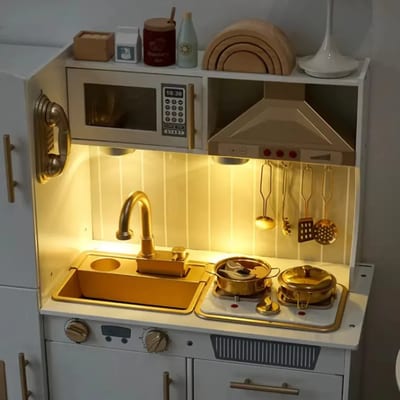
A white and gold wooden kitchen set for children aged 3 to 8, with a fridge, microwave, stove, oven, sink, telephone, lights, sounds, gold pots and play food.
- For ages 3 to 8
- Delivered in Nairobi within 3 hours
You pay after it arrives, by cash or M-Pesa.
Frequently asked questions
Is a play kitchen Montessori?
A play kitchen becomes Montessori when it is set up for real, child-led tasks: fewer items, a place for each, and small real jobs like pouring and wiping. The set itself is the starting point.
What age is Montessori kitchen play for?
Montessori kitchen play at our set suits children from age 3, the recommended starting age, up to 8. Younger children pour and wipe, and older ones set tables and plan meals.
What are practical life activities?
Practical life activities are everyday tasks children practise for real, such as pouring, wiping, sorting, washing and setting a table. In Montessori education, they are how children learn to look after themselves and their space.
Do Montessori kitchens use real water?
Montessori kitchens often use a little real water, poured from a small jug into a cup on a tray. Keep the water on the tray, with a cloth ready, so the wooden set stays dry.
How many items should a Montessori play kitchen have?
A Montessori play kitchen works best with a few items at a time, such as one pot, one pan, a spoon and some play food. Swap items each week to keep interest fresh.
Can a child use the kitchen set alongside a Montessori school?
A child at a Montessori school can use the kitchen set at home in the same calm way. Ask the teacher which tasks your child enjoys, and set those up on the tray.
Should a Montessori kitchen have toy food or real food?
A Montessori kitchen can use toy food and real food. Play food works for pretend meals at the set, and simple real food such as a banana to peel works at a table with a grown-up.
How do I encourage independence with a play kitchen?
Independence at a play kitchen grows when everything is in reach and has a home, and when the grown-up steps back. Show a task once, then let your child do it their own way.
Read next
Set up a Montessori corner
Order the set on WhatsApp and pay after it arrives in Nairobi. Then add a small jug, a cloth and a tray, and let your child lead.
You pay after it arrives, by cash or M-Pesa.