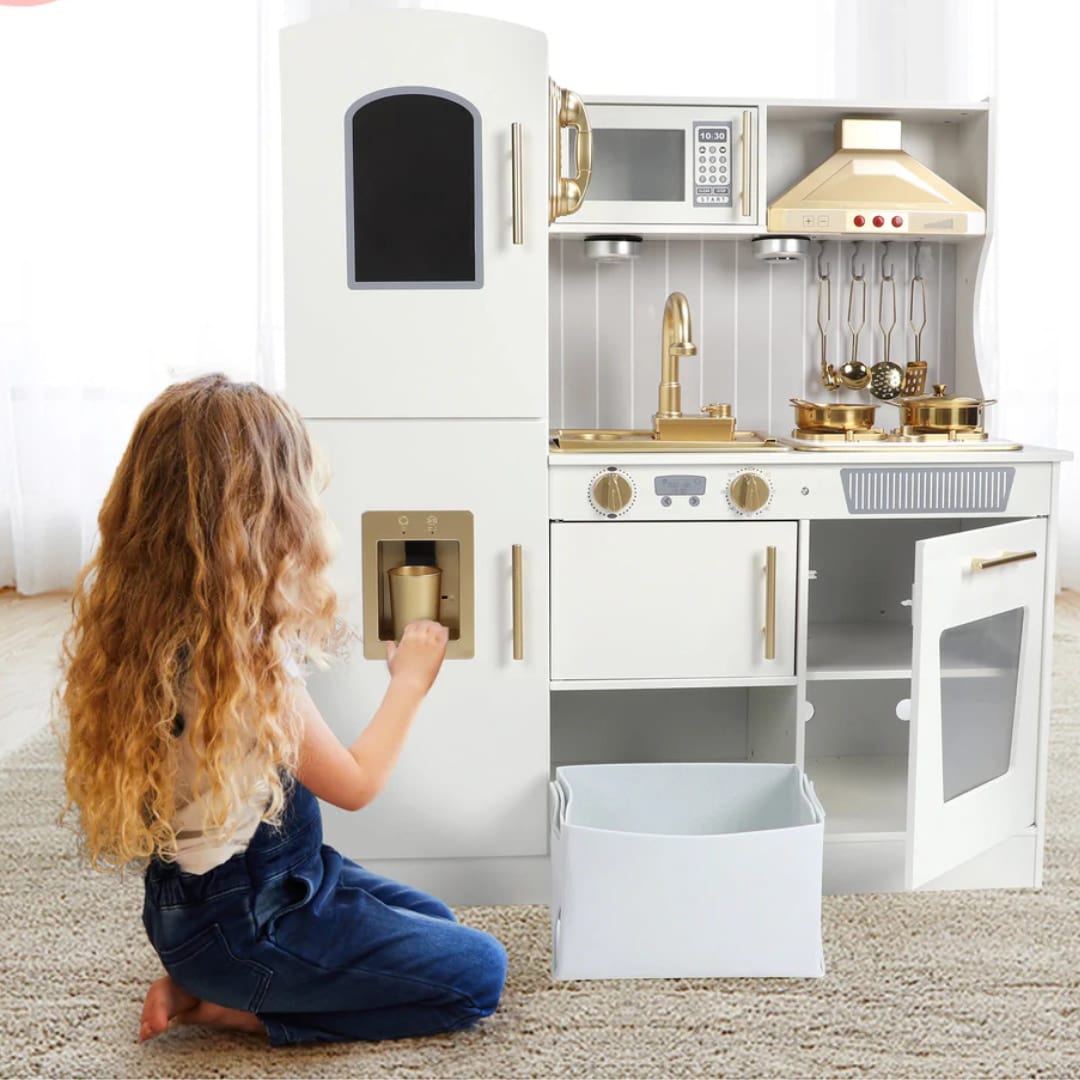
Play Kitchen in Kenya: What Pretend Cooking Teaches Your Child
What does a play kitchen teach children?
A play kitchen teaches children new words, early counting, sharing and turn-taking, and the hand control that comes from pouring, stirring and turning knobs. The American Academy of Pediatrics links pretend play with language and problem-solving. Our wooden play kitchen, at KSh 18,999, suits children aged 3 to 8.
- KSh 18,999
- Ages 3 to 8
- Pay after delivery
- 3-hour delivery in Nairobi
- 24-hour delivery countrywide
You pay after it arrives, by cash or M-Pesa.
Updated by The Wooden Kitchen Sets team
Watch a 4-year-old at a play kitchen for ten minutes and you see a lot of learning. She names every food, counts out the portions, takes turns at the stove and carries a full pot without spilling. None of it feels like a lesson to her.
| Language | Naming foods, ordering, telling the story of a meal |
|---|---|
| Early maths | Counting portions, sorting food, sharing out |
| Social skills | Taking turns, serving others, playing a role |
| Hand control | Pouring, stirring and turning knobs |
What is a play kitchen?
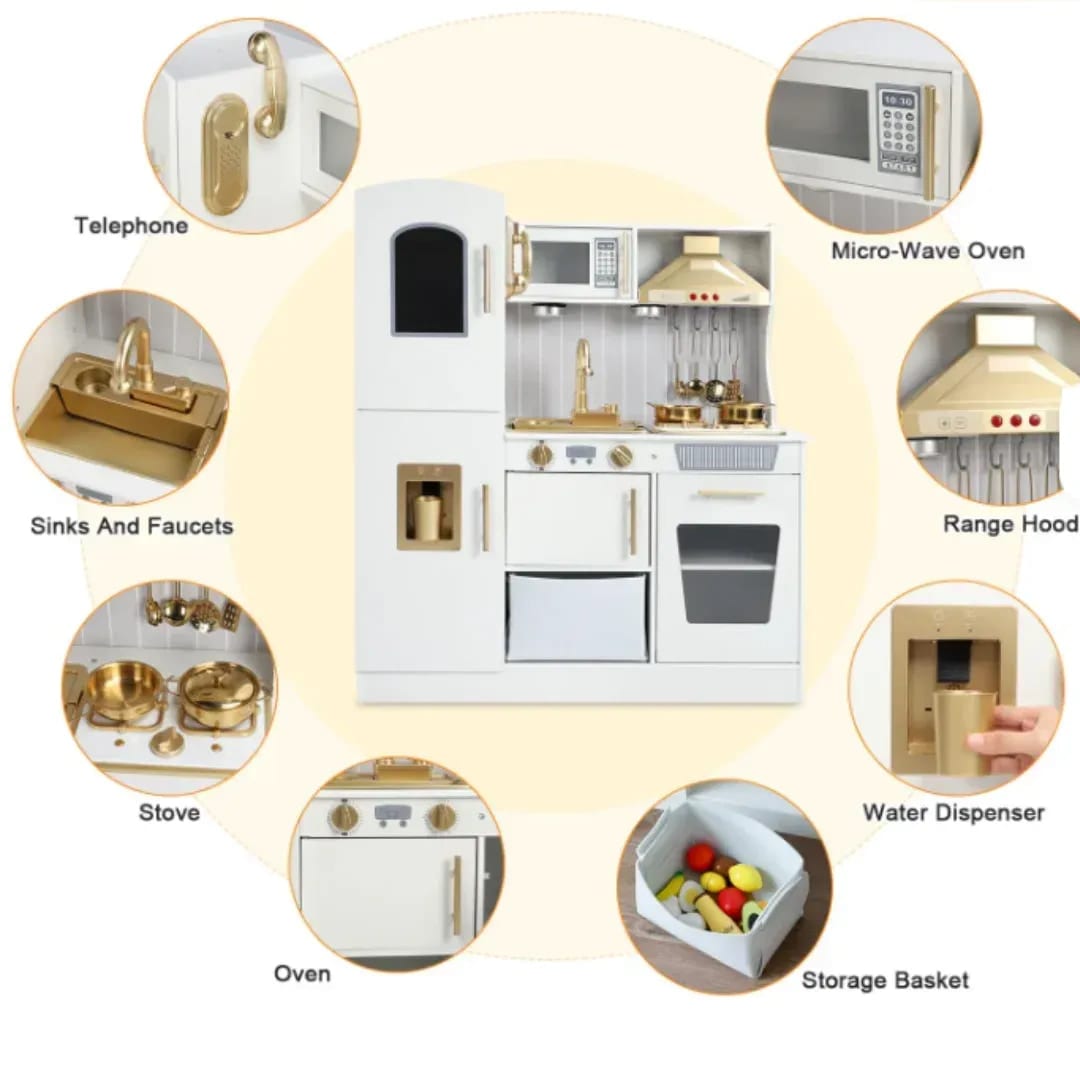
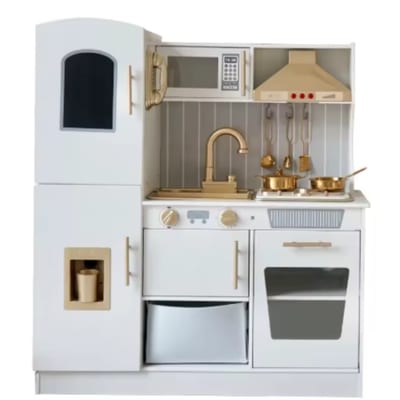
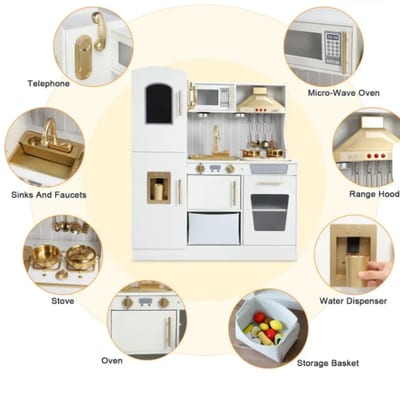
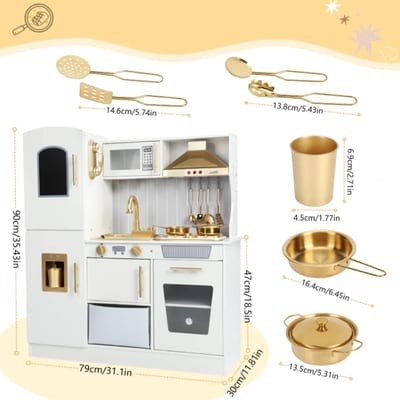
A play kitchen is a child-sized pretend kitchen where children copy real cooking. It usually has a stove, a sink and somewhere to store food, so the child can act out a whole meal from start to finish. Ours adds a fridge, a microwave, an oven, a phone and lights and sounds.
People in Kenya also call it a toy kitchen or a kitchen set. All three names mean the same thing: a kitchen made for play.
How does a play kitchen build language?
A play kitchen builds language because every game needs words: the names of foods, the steps of a recipe and the talk between cook and customer. A child who serves you chapati has to ask what you want, say what is cooking and tell you when it is ready.
The American Academy of Pediatrics report The Power of Play describes play with caring adults as one of the main ways children build language. So sit down as the customer, ask for the menu, and let the conversation run.
How does pretend cooking teach early maths?
Pretend cooking teaches early maths through counting, sorting and sharing out food, three jobs that every meal needs. Three scoops of rice go into the pot, four pieces of chapati go on the table and four mandazi are shared between four cousins. The numbers mean something, because the meal depends on them.
The CDC milestones for age 5 include counting to 10. A kitchen gives that counting a reason, from the number of guests to the minutes the cake spends in the oven.
Which social skills does a play kitchen build?
The social skills a play kitchen builds are taking turns, serving other people and playing a role in a group. When two children share one stove, someone has to wait. When one is the cook and the other serves, they have to agree on the order.
The CDC lists following rules or taking turns in games with other children as a milestone by age 5. A kitchen game gives children a reason to take turns.
How does a play kitchen practise hand control?
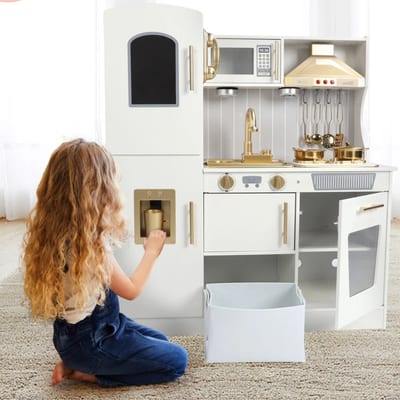
A play kitchen practises hand control through small, careful movements: turning knobs, opening doors, carrying a pot and stirring with a spoon. Each one asks the fingers and wrist to work together, and the game gives a reason to repeat them. Steady hands come from this kind of everyday practice.
The CDC milestones for age 3 include using a fork and stringing items together, the same kind of careful hand work.
Can pretend play help children handle their feelings?
Pretend play can help children handle their feelings, because a game lets them practise everyday ups and downs in a safe way. A cake that needs another try or a guest who arrives early are small problems a child can solve. The American Academy of Pediatrics notes in The Power of Play that play helps children manage stress.
You may also see your child act out parts of their own day at the kitchen, such as a busy morning or a trip to the market.
Which skill shows up where in the kitchen?
Each skill shows up at a different place in the kitchen: language at the phone and the counter, counting at the stove, turn-taking at the busiest spots and hand control everywhere. The table matches each skill to the moment you are most likely to see it, with the source that describes it.
| Skill | What it looks like at the kitchen | Source |
|---|---|---|
| Language | Taking an order and saying what is cooking | AAP, The Power of Play |
| Counting | Three scoops of rice in the pot, one portion per guest | CDC milestones, age 5 |
| Turn-taking | Waiting for the stove, swapping cook and waiter | CDC milestones, age 5 |
| Hand control | Pouring, stirring and turning the knobs | CDC milestones, age 3 |
| Pretend play | Being the cook, the mum or the shopkeeper | CDC milestones, age 4 |
To see how each part of our set invites a different game, take the toy kitchen tour.
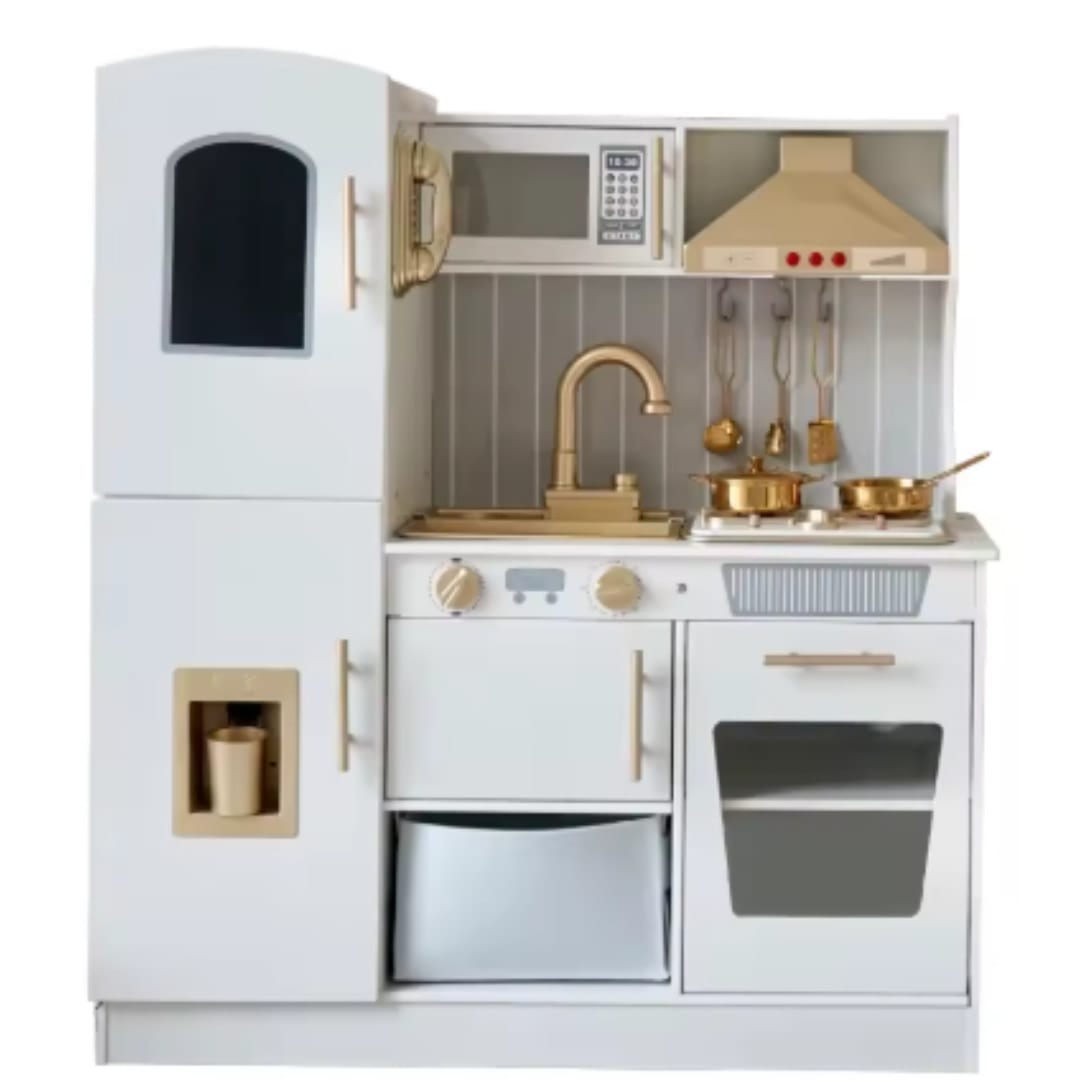
Wooden Kitchen Set for Kids, White and Gold
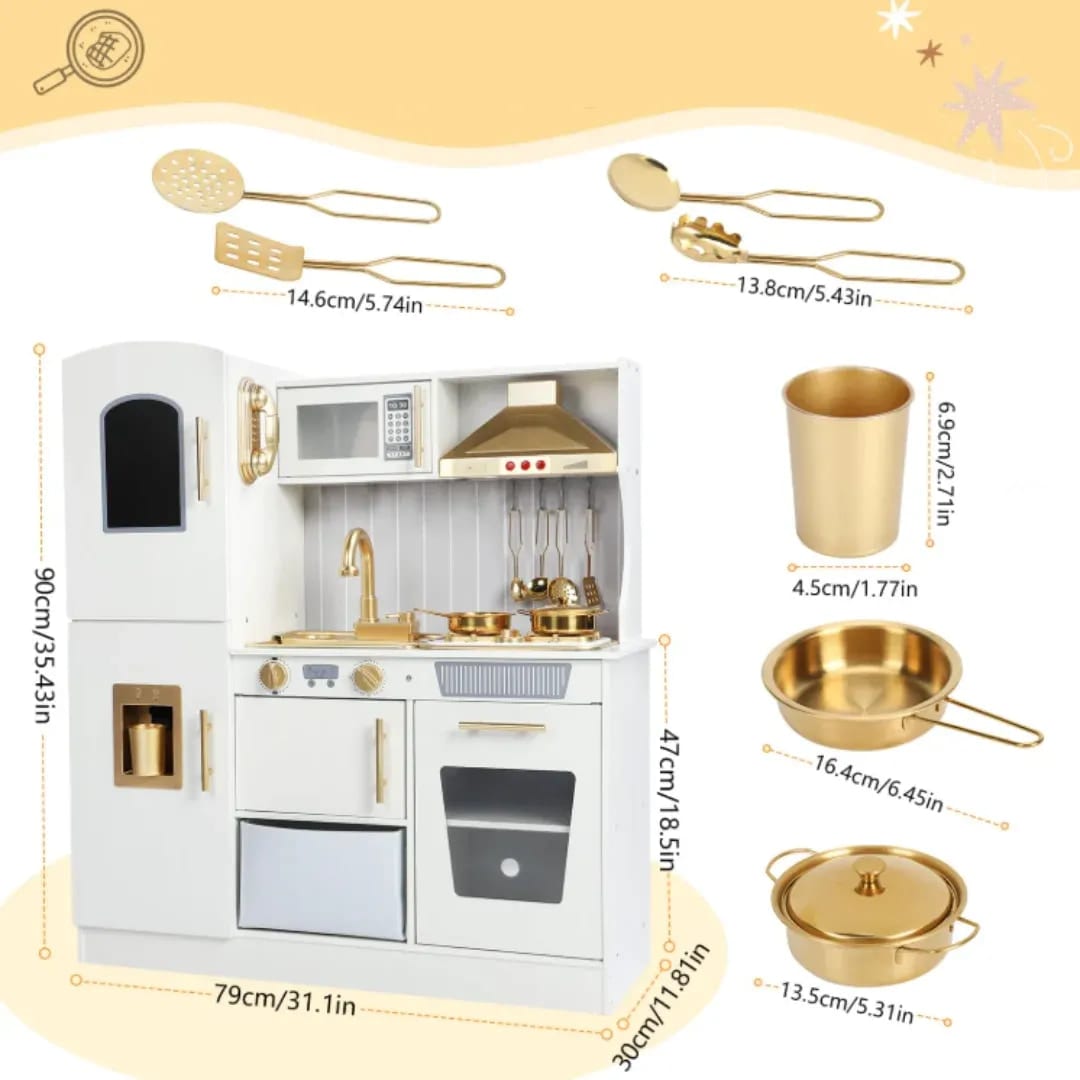
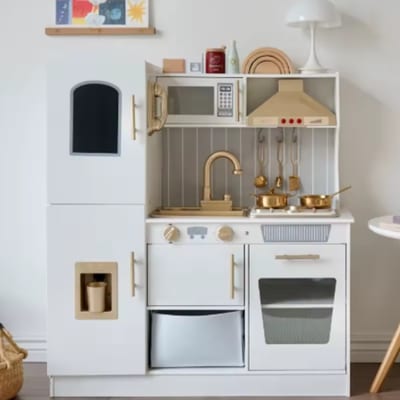
A white and gold wooden kitchen set for children aged 3 to 8, with a fridge, microwave, stove, oven, sink, telephone, lights, sounds, gold pots and play food.
- For ages 3 to 8
- Delivered in Nairobi within 3 hours
You pay after it arrives, by cash or M-Pesa.
Frequently asked questions
What do children learn from playing with a kitchen set?
Children learn words, counting, turn-taking and steady hand movements from playing with a kitchen set. They also practise looking after others, because every meal is cooked for someone.
Is pretend play good for child development?
Pretend play is good for child development, according to the American Academy of Pediatrics, which links it with language, problem-solving and handling stress.
At what age do children start pretend play?
Children start simple pretend play, such as feeding a doll, at around two and a half, according to the CDC milestones. By 4, most pretend to be someone else, like a cook or a teacher.
Does a play kitchen help with speech?
A play kitchen helps with speech by giving children something to talk about and someone to talk to. Naming foods, taking orders and describing a meal all build their words, as the AAP's play report describes for pretend play.
What numbers come up in pretend cooking?
The numbers that come up in pretend cooking are scoops of rice, portions on the table and guests at the meal. Each one gives a child a reason to count, so the numbers in the game have a job to do.
Is a play kitchen the same as a toy kitchen?
A play kitchen and a toy kitchen are the same thing: a child-sized pretend kitchen. In Kenya, people also call it a kitchen set.
Do play kitchens help children learn to share?
Play kitchens help children learn to share, because one stove and one phone have to be taken in turns. Games with a cook and a customer also teach them to give as well as take.
What is a wooden play kitchen?
A wooden play kitchen is a play kitchen built from wood rather than plastic. Ours is wood with a white finish and gold accents, and it stands 90 cm high.
Read next
Bring the learning home
See the set at our Nairobi CBD shop, or order on WhatsApp and pay after it arrives in Nairobi.
You pay after it arrives, by cash or M-Pesa.