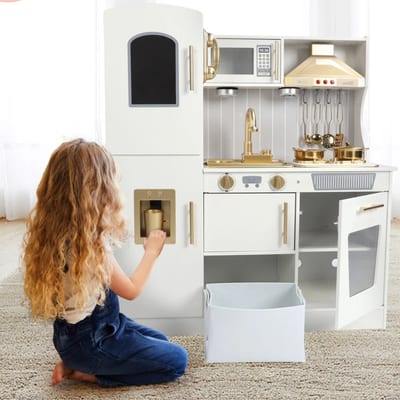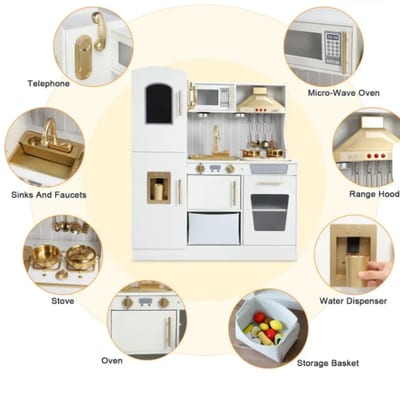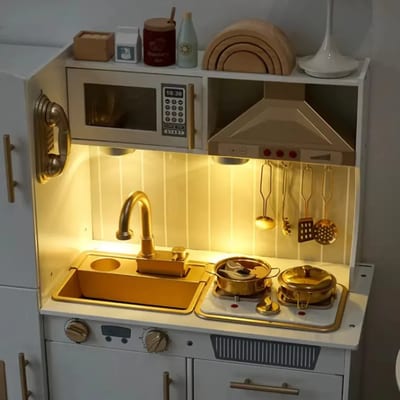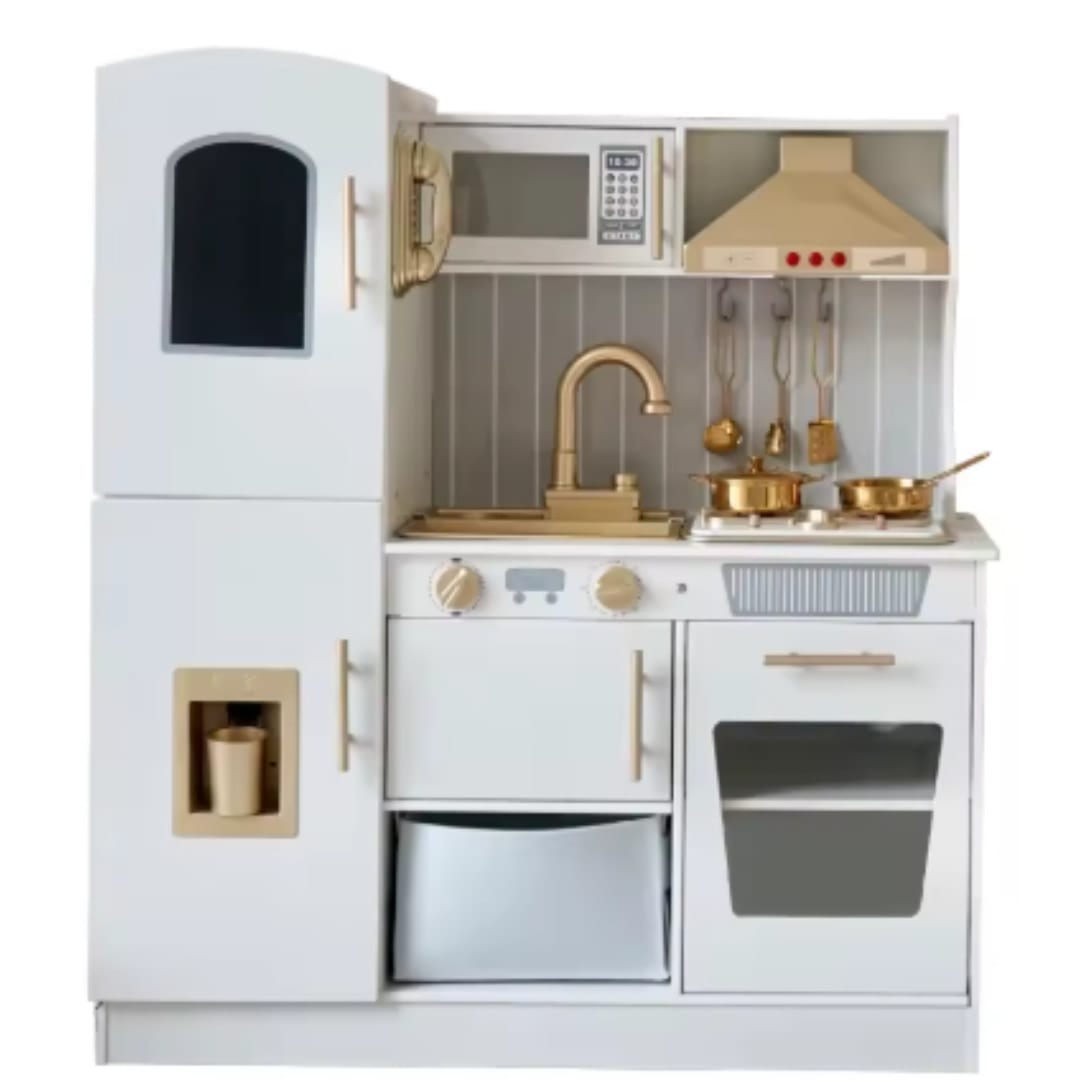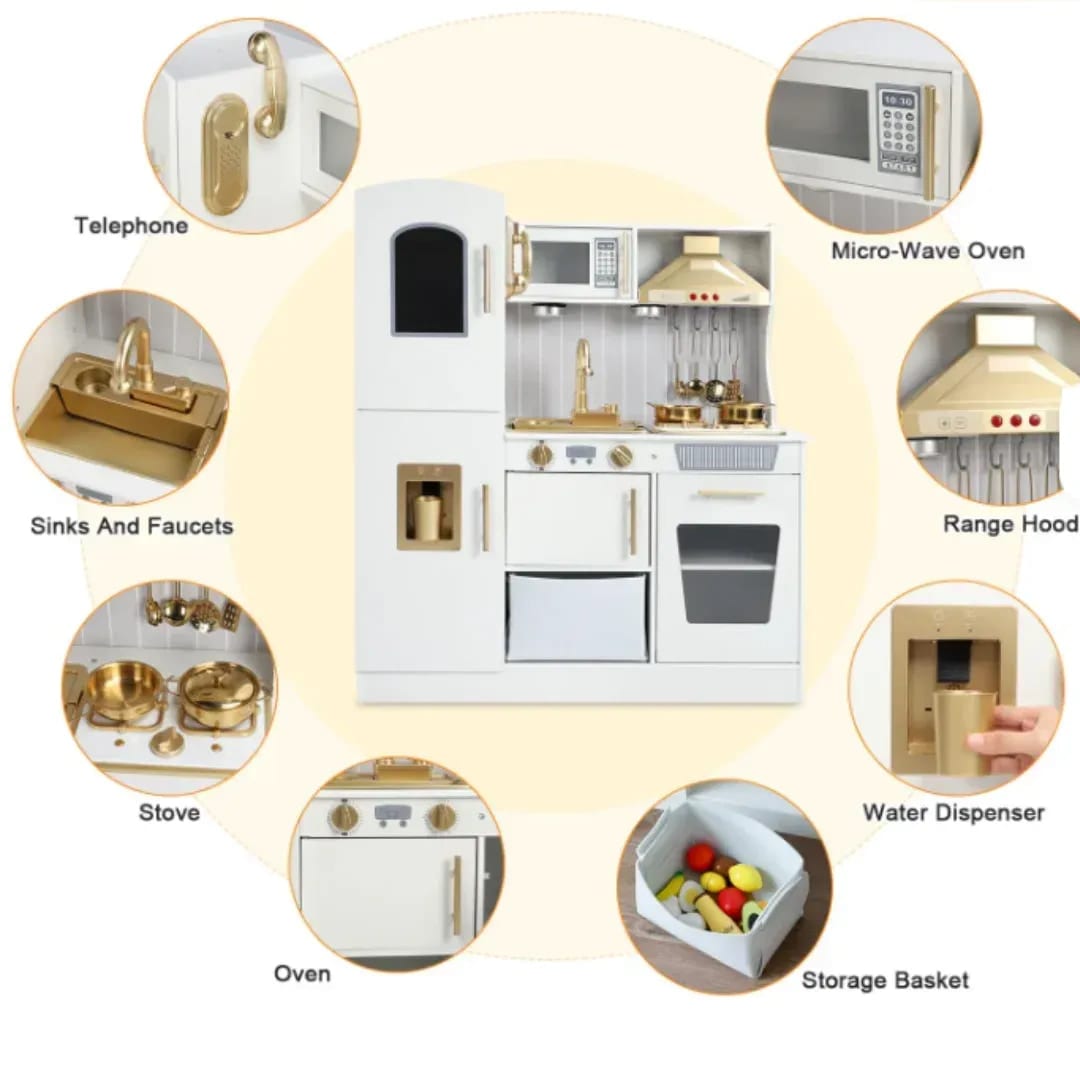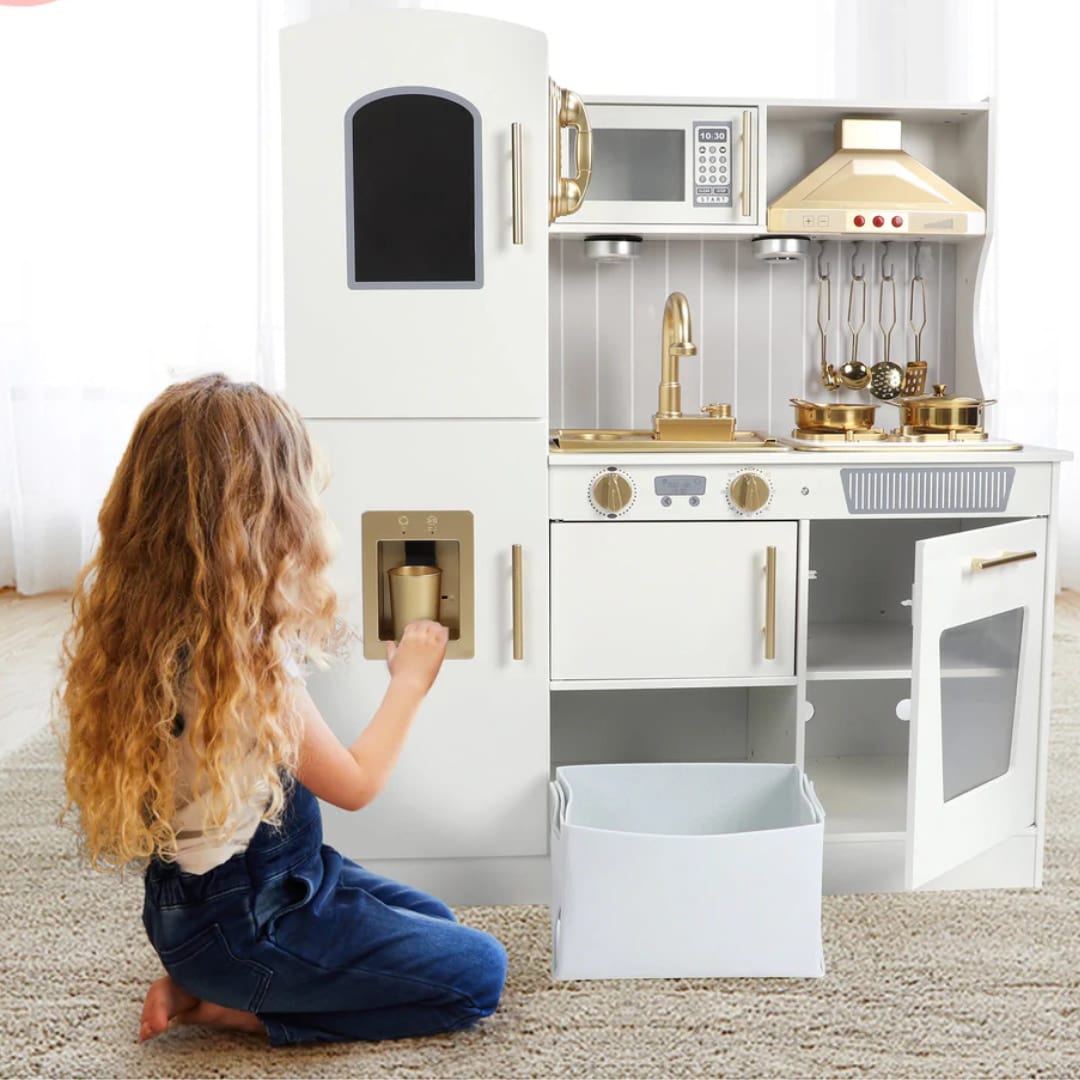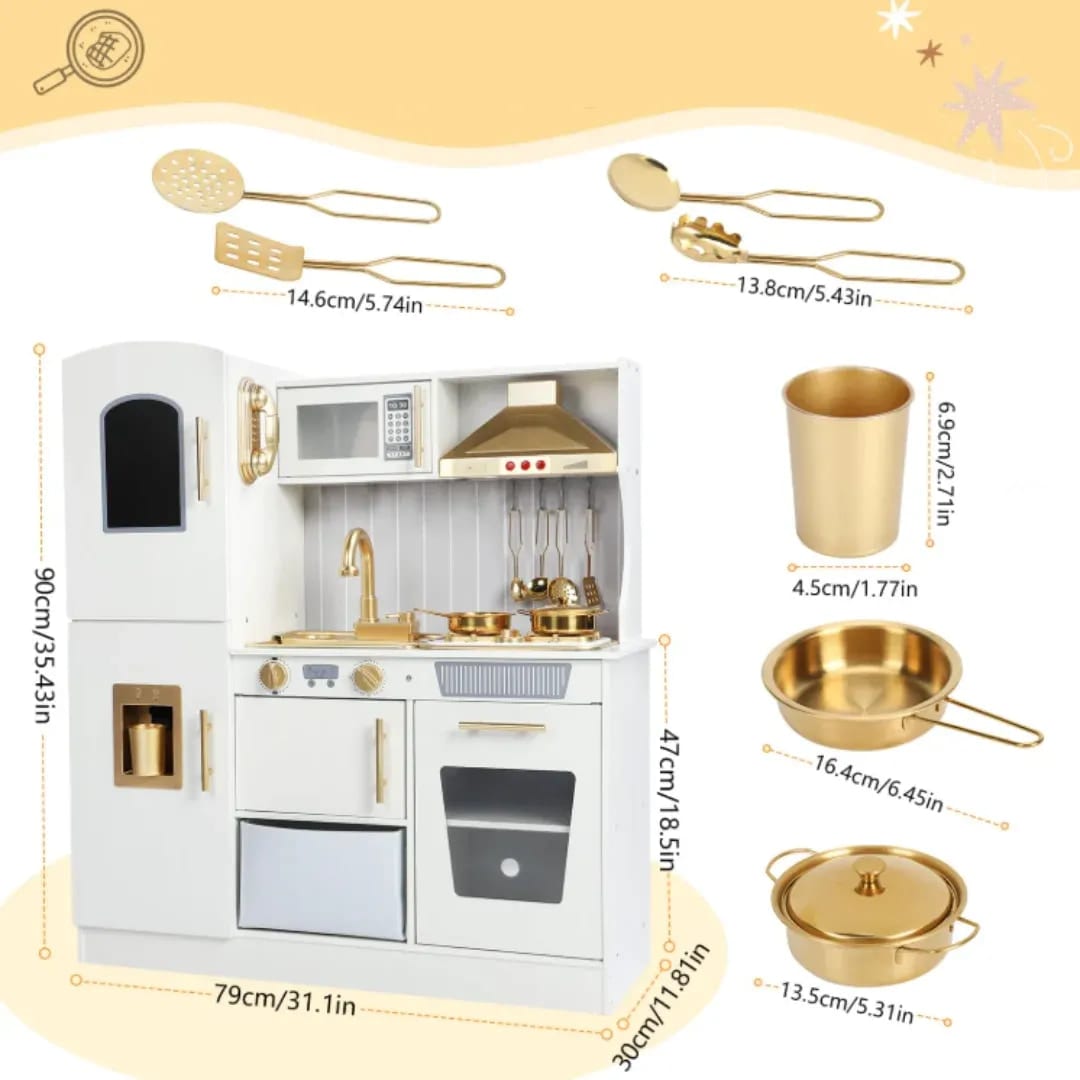
A PP2 parent in Nyeri hears her daughter counting to ten at bedtime. At the play kitchen, those numbers can get a job: counting guests, sharing out food and paying for the shopping.
You don't need worksheets or flash cards for any of this. A pot, some play food and a handful of homemade card shillings are enough to take a child from counting to three all the way to adding up a shopping bill.
How does a play kitchen teach numbers?
A play kitchen teaches numbers by giving them a job to do. Two ladles of stew go into each bowl, five chapati are shared between five cousins, and the oven waits for a count of ten. Counting gives every meal a job, so the numbers mean something to the cook.
Counting to 10 is one of the CDC milestones for age 5. A busy kitchen gives a child plenty of chances to practise it, from the number of guests to the seconds the cake spends in the oven, and every count ends with food on a plate.
Which counting games suit each age?
The counting games that suit each age grow with the child's numbers: small amounts at 3 and 4, counting to 10 at 5, and adding and taking away from 6. Each game below uses only the kitchen, its play food and a little paper. Start with the row for your child's age and move down when they are ready.
| Age | Number skill | Kitchen game |
|---|---|---|
| 3 to 4 | Counting small amounts | Count three scoops of rice into the pot |
| 5 | Counting to 10 | Lay out ten pieces of food for ten guests |
| 6 | Adding small numbers | Two chapati and one egg make three things on a plate |
| 7 | Adding with money | Add up the price of a meal in play shillings |
| 8 | Giving change | Pay with a 100 note and count the change |
What are good counting games at the stove?
- Scoop count: count each scoop of rice into the pot out loud.
- Guest count: count the dolls or family at the table, then cook one portion each.
- Oven countdown: count down from ten while the cake bakes.
- Stir count: stir the stew ten times, then serve.
- Plate check: count the food on each plate and make sure every plate matches.
- Tidy count: count each item back into the basket at the end.
Saying the numbers out loud helps at first, and the kitchen gives your child something to touch with every number. For counting in Kiswahili as well, see our post on kitchen words in English and Kiswahili.
How do you make play shillings at home?
- Cut card into rectangles the size of real notes, and draw a big number on each: 50, 100, 200 and 500.
- Cut circles from card for coins, and write 1, 5, 10 and 20 on them.
- Let your child colour each note, so the money looks clearly like play money.
- Make plenty of 10s and 20s, because they get used most.
- Keep the money in a small purse or envelope beside the kitchen.
Kenyan coins come in 1, 5, 10 and 20 shillings, and notes start at 50. Using the same numbers in play means your child recognises them when they see real money at the shops.
How do you run a mama mboga market game?
- Set out the play food on the counter as a market stall.
- Write a price for each item on a small paper tag, such as 10 or 20 shillings.
- Give the shopper a purse of play shillings and a basket.
- Let the shopper choose two or three items and hand over the money.
- Ask the stall owner to count the money and give any change.
- Swap roles, so both children buy and sell.
The market game is where counting turns into real maths. Adding prices, paying and giving change all happen in the game, and your child gets to be in charge of the stall.
How do you add simple sums for older children?
Simple sums for older children come from turning a meal into a bill. A plate of chapati costs 20 shillings, chai costs 10 and a mandazi costs 10, so a full breakfast costs 40. Ask a 7-year-old to write the bill and a sibling to pay it, and adding becomes part of the game rather than homework.
For an 8-year-old, add change. Pay a 40 shilling bill with a 50 note, and the cashier has to work out that 10 shillings come back.
A small notebook beside the kitchen lets them write each sale down, the way a real shop keeps a record. At the end of the day, they can count the takings and see how much the café made.
Frequently asked questions
At what age can a child start counting at a play kitchen? A child can start counting at a play kitchen as soon as they enjoy pretend cooking, beginning with one, two, three scoops of rice. By 5, the CDC milestones include counting to 10.
How do you make play money for kids in Kenya? Play money for kids in Kenya is easy to make from card: rectangles for 50, 100, 200 and 500 notes, and circles for 1, 5, 10 and 20 shilling coins. Let your child colour each one.
Should play money look like real Kenyan shillings? Play money works best when it is clearly different from real shillings, such as card notes drawn and coloured by your child. Using the same numbers as real money still teaches the values.
What maths does a market game teach? A market game teaches counting, adding prices, paying the right amount and giving change. Children practise all four without noticing, because the game needs them.
How can a 7-year-old practise sums at a play kitchen? A 7-year-old can practise sums at a play kitchen by pricing each dish on a menu and adding up the bill for every order in play shillings.
Can real coins be used as play money? Real coins can be used as play money for older children who no longer put things in their mouths. For younger children and visiting babies, card coins are better, as the American Academy of Pediatrics advises keeping small parts away from children under 3.
How do I teach a child the value of money with pretend play? Teaching a child the value of money with pretend play works through choices: give them 50 play shillings and a stall full of prices, and let them decide what to buy.
How do teachers use a play kitchen for maths? Teachers use a play kitchen for maths by running counting, sorting and market games in small groups. Our page on play kitchens for schools and daycares links each game to Kenya's pre-primary learning areas.
What number games work with two children? Number games that work with two children are the market game, with one seller and one shopper, and a sharing game, where one child serves and the other checks that each plate has the same amount. Swap roles halfway, so both get to count.
How long should a counting game last? A counting game at the play kitchen works best kept short for a young child, ending while it is still fun. Older children can keep the shop open for longer, adding new customers as they go.