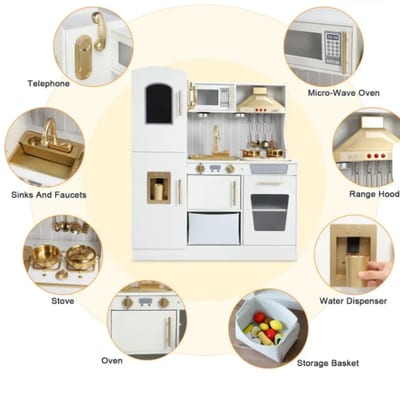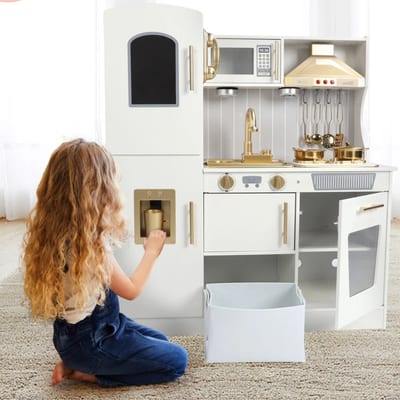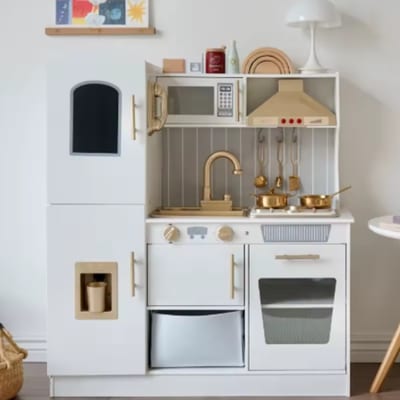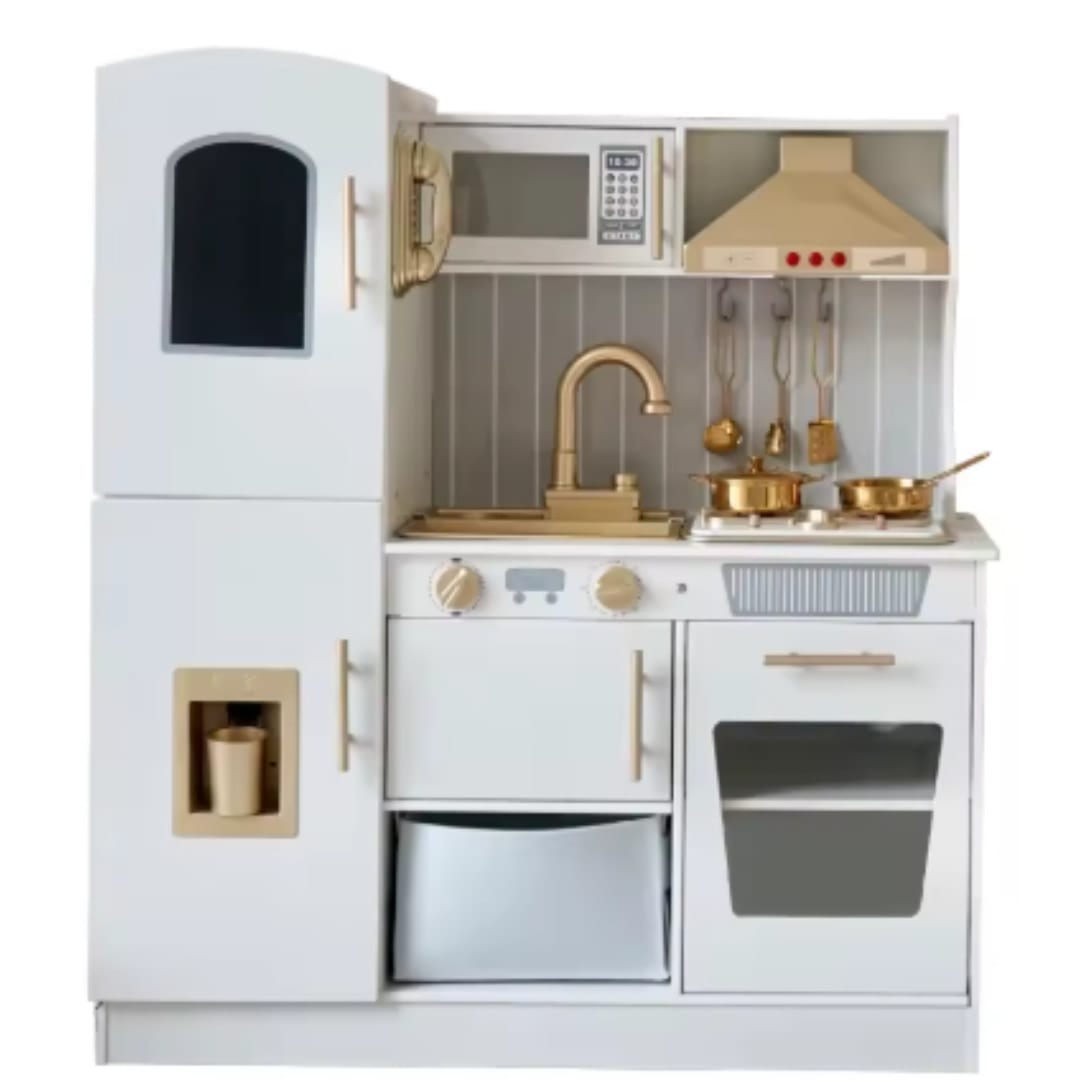
An aunt babysitting three children on a long Saturday needs more than one idea. This guide gives her thirty, sorted into five themes, so a new game is ready whenever the old one runs out.
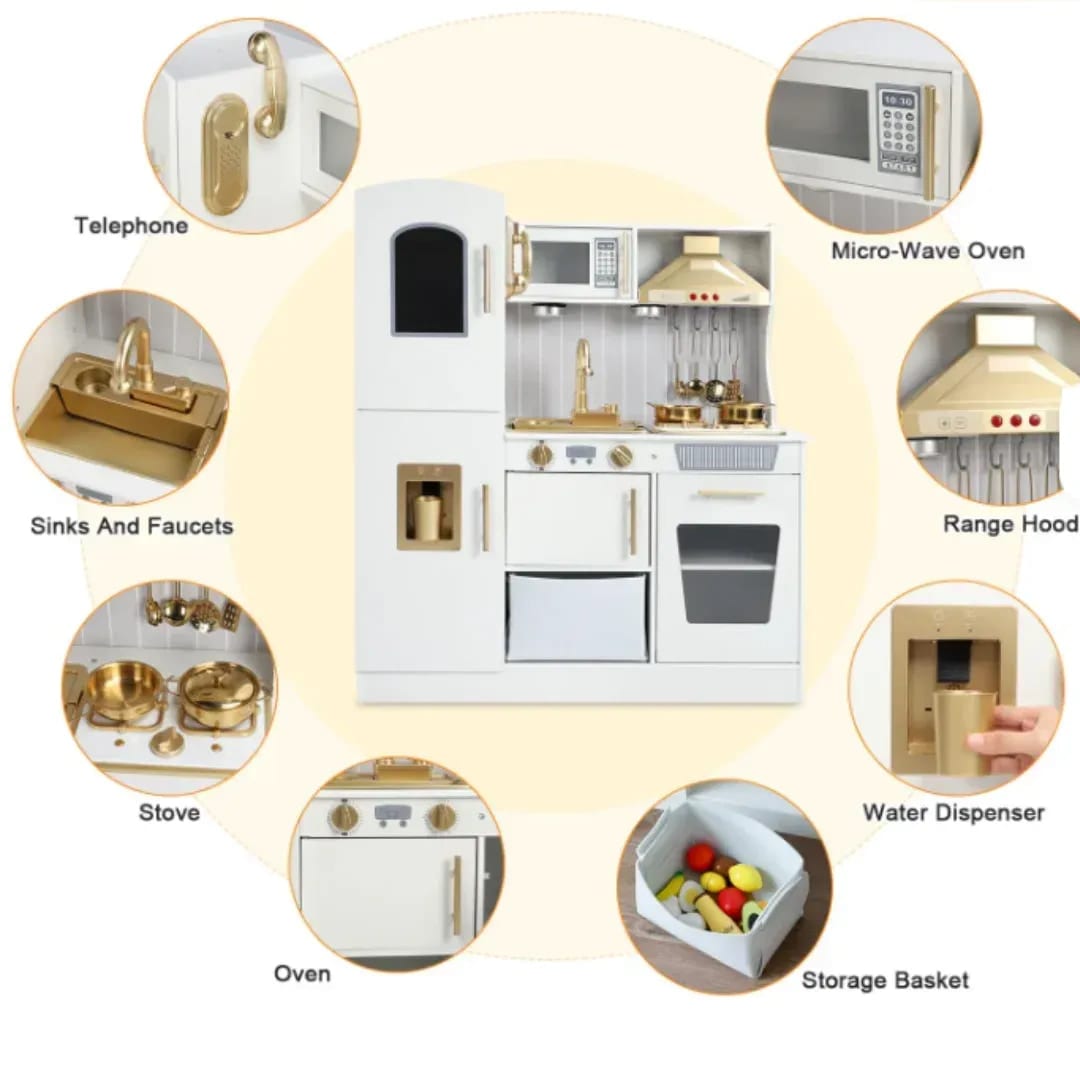
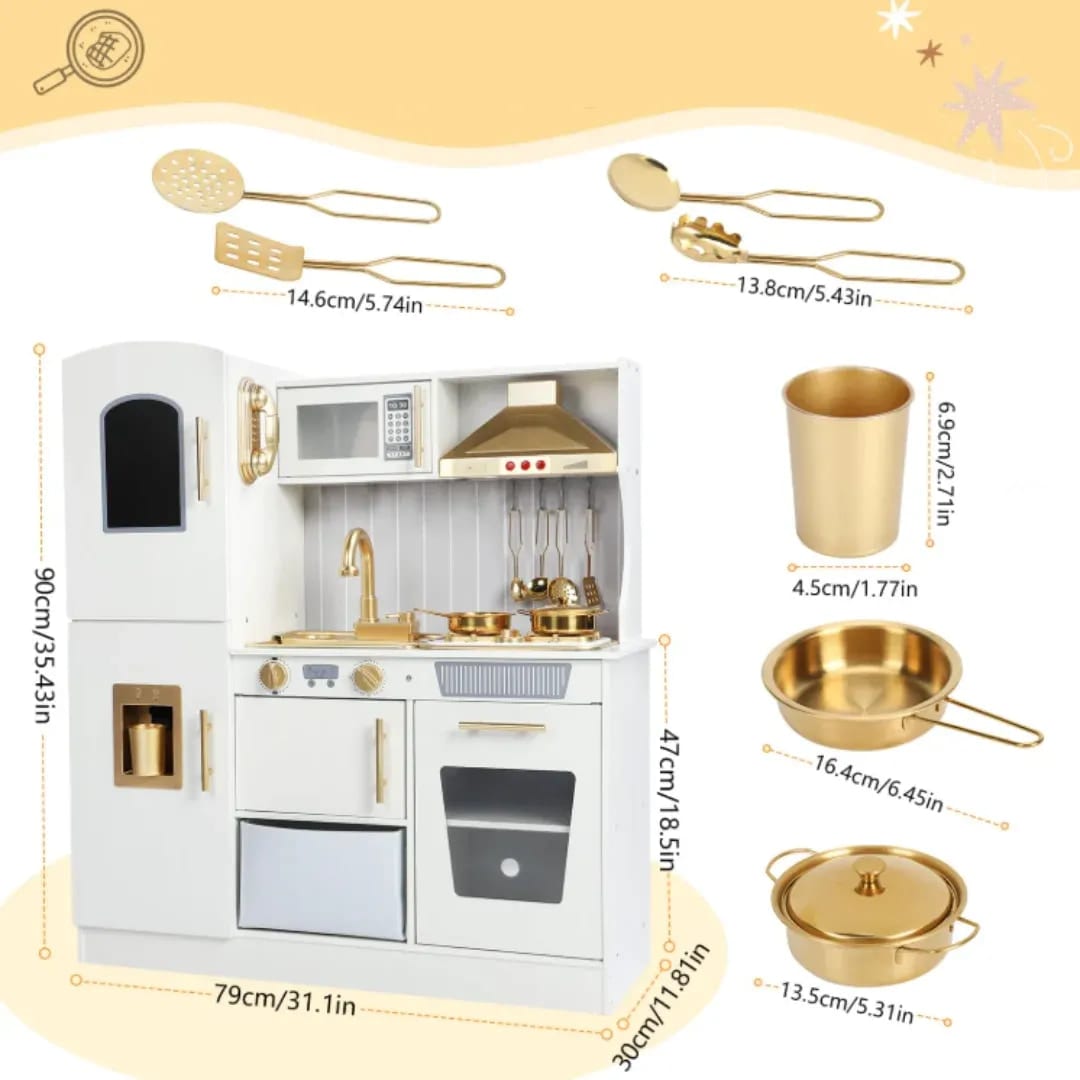
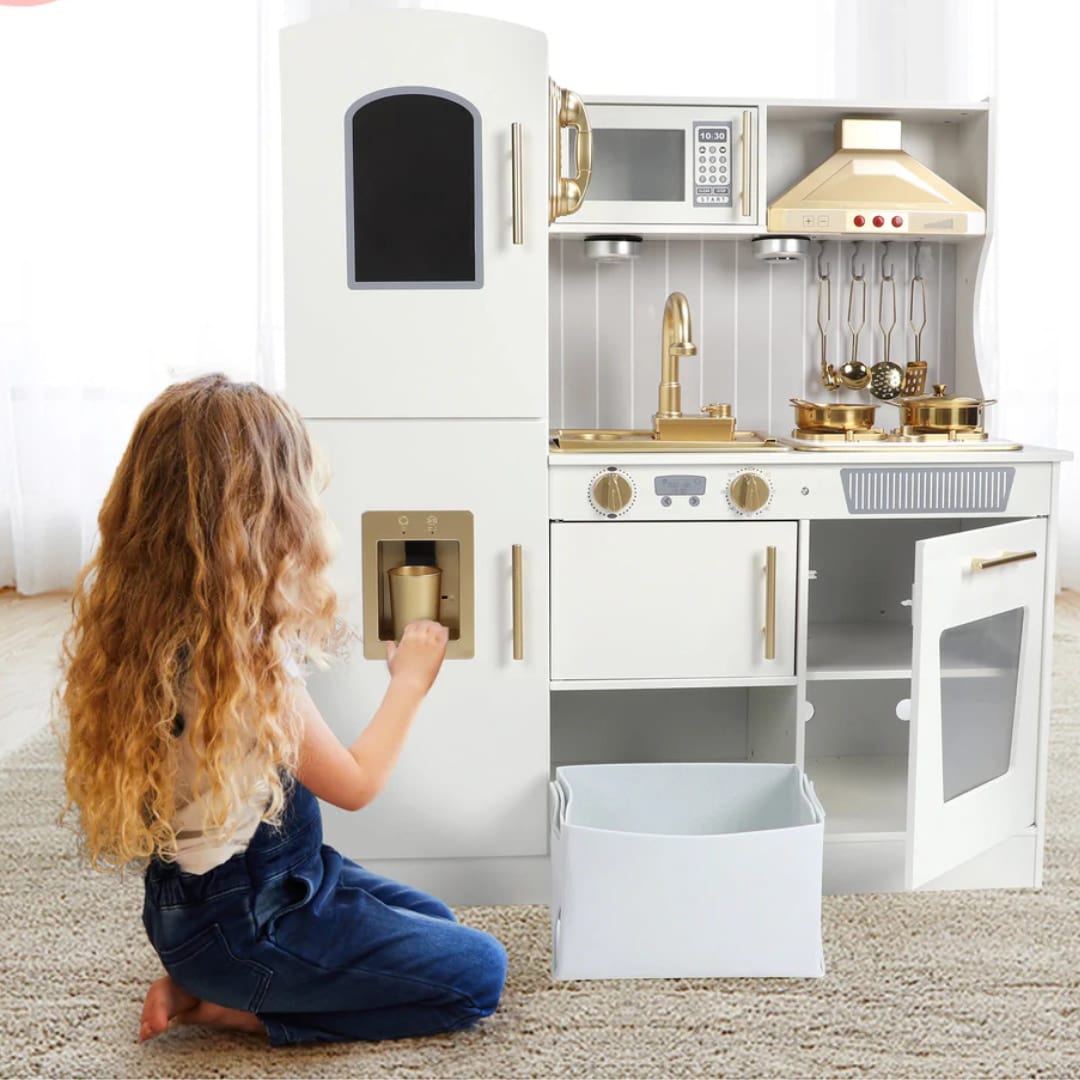
Most games need only the kitchen, its play food and a few things from home, such as paper or a teddy. Many have a Kenyan twist, because a child cooks what they see cooked at home.
How do you choose a game for your child's age?
Choosing a game for your child's age is mostly about how much story and how many rules it has. Three-year-olds enjoy games with one action, such as pouring tea, and four and five-year-olds like playing a role, as the CDC milestones describe.
Children of six to eight enjoy games with rules, money and other players. The table shows where to start.
| Game | Best from age | Players |
|---|---|---|
| Tea for teddies | 3 | One child |
| Chapati day | 3 | One child and a grown-up |
| Family breakfast | 4 | One or two children |
| Mama mboga stall | 4 | Two children |
| Restaurant with a menu | 5 | Two or more |
| Cooking show | 6 | One cook and an audience |
| Two-team cook-off | 7 | Four or more |
What are good everyday cooking games?
- Tea for teddies: pour pretend chai for a row of soft toys and ask who takes sugar.
- Family breakfast: cook a pretend breakfast, set the table and call everyone to eat.
- Chapati day: roll, flip and stack pretend chapati, then share them out.
- Sunday lunch: cook pilau in the big pot while a grown-up lays the table.
- School lunch box: pack a pretend lunch for a doll's first day at school.
- Soup for a sick teddy: cook something warm and serve it in bed.
What are good restaurant and café games?
- Hotel with a menu: draw a menu, take orders and cook each dish to order.
- Kibanda stall: run a roadside food stall selling chapati and beans.
- Chips stand: fry pretend chips in the pan and serve them hot.
- Café with a waiter: one child cooks, one carries the food and clears the table.
- Phone orders: take delivery orders on the kitchen phone and pack them up.
- Juice bar: press the water dispenser for pretend juice and name the flavours.
What are good shop and market games?
- Mama mboga stall: sell the play food from the counter, calling out the prices.
- Supermarket checkout: scan the play food and pack it into a basket.
- Corner kiosk: sell bread and milk for play shillings.
- Bakery: bake cakes and bread in the oven and sell them by the piece.
- Delivery rider: carry orders from the kitchen to customers around the room.
- Price tags: stick paper prices on the food and add up a shopping list.
What are good learning games at the kitchen?
- Counting spoons: scoop pretend rice into the pot with the spoon, counting aloud.
- Sort by type: put the play food into groups, one pot for each.
- Picture recipe: follow a recipe drawn as pictures, one step at a time.
- What is missing?: hide one food in the fridge while your child looks away.
- Two-language cooking: name every food in English and in Kiswahili.
- Shopping list: draw a list of foods, then find each one in the fridge.
What are good group and party games?
- Recipe reader: one child reads out the steps while another cooks.
- Chef says: the leader gives orders such as "Chef says stir the pot", and everyone follows only when the chef says so.
- Bakery morning: bake a cake in the oven and slice it for the family.
- Two-team cook-off: two teams cook the same dish, and a grown-up tastes both.
- Taste test: guests close their eyes and guess the pretend food.
- Wedding feast: cook a big meal for a row of dolls at a long table.
How do you set up a new game in two minutes?
- Choose one game from the lists above.
- Clear the counter and put out only what the game needs.
- Add one prop from the house: a paper menu, a basket or a teddy.
- Give each child a job and tell them the first step.
- Play the first customer yourself, then step back.
Starting a game this way takes a couple of minutes. After a few rounds, your child may start inventing their own versions.
Why do so many games work at one kitchen?
So many games work at one kitchen because every game needs the same three things: somewhere to cook, something to cook and someone to cook for. The stove, the play food and a willing customer cover all three. Change the setting, and the same kitchen becomes a café, a kibanda or a school canteen.
The American Academy of Pediatrics report The Power of Play describes this kind of open-ended pretend play as one of the main ways children build language and problem-solving. A new game is also a new chance to practise both.
Keep this list somewhere handy, such as a photo on your phone. On a slow afternoon, pick one game you haven't tried yet, and let your child add their own twist to it.
Frequently asked questions
What is the easiest play kitchen game for a 3-year-old? The easiest play kitchen game for a 3-year-old is tea for teddies: pour pretend chai, hand it round and ask who wants more. It uses one simple action and needs no rules.
How do I play restaurant with my child? Playing restaurant with your child starts with a menu, even a drawn one. Sit down as the customer, order a dish, wait for it to arrive and ask for the bill.
What is a good play kitchen game for two children? A good play kitchen game for two children is the café with a waiter, where one child cooks and the other takes orders and serves. Swap the jobs halfway through.
Can a child play kitchen games alone? A child can play kitchen games alone, especially everyday cooking games like a family breakfast or soup for a sick teddy. Soft toys make good guests.
What are good kitchen games for one child and one grown-up? Good kitchen games for one child and one grown-up are a hotel with a menu, the shopping list game and a family breakfast, with the grown-up as the customer.
What kitchen games suit a group of cousins? Kitchen games that suit a group of cousins are the group ones: chef says, a taste test and a two-team cook-off. They let several children join at once.
Which kitchen game suits a child who likes a quieter role? A kitchen game that suits a child who likes a quieter role is cooking at the stove while a grown-up serves. Phone orders also work well for a child who likes to talk from behind the counter.
How can a grown-up join a kitchen game without taking over? A grown-up can join a kitchen game without taking over by playing the customer. Ask questions, order food and let your child decide what happens next.