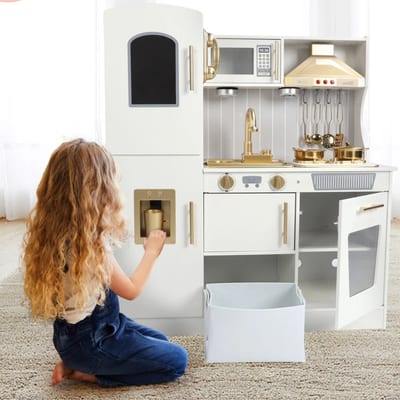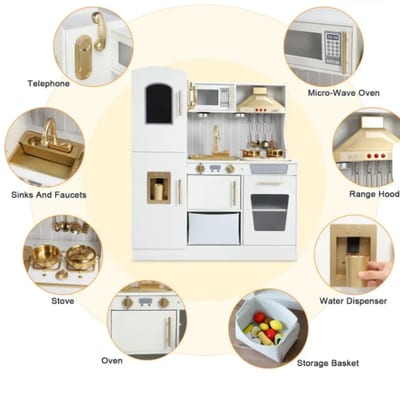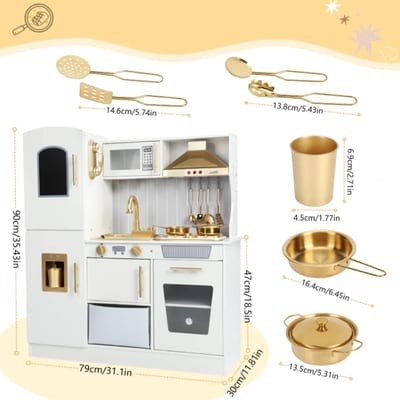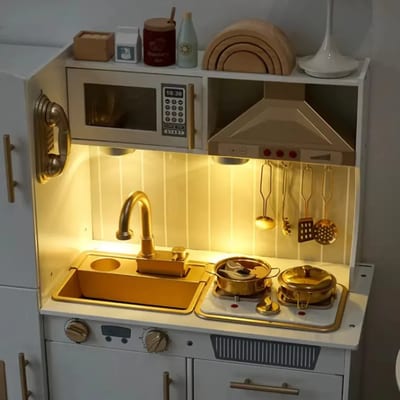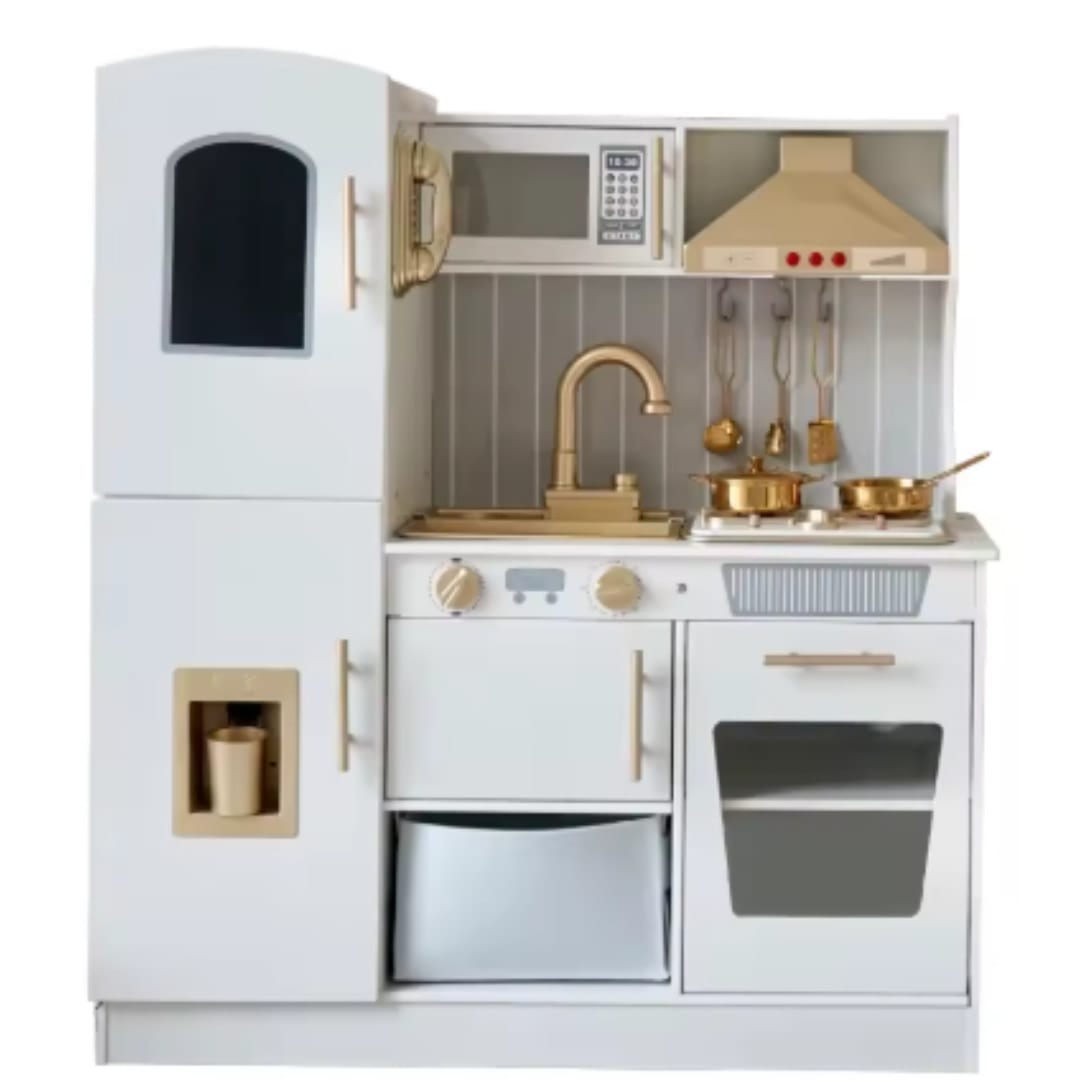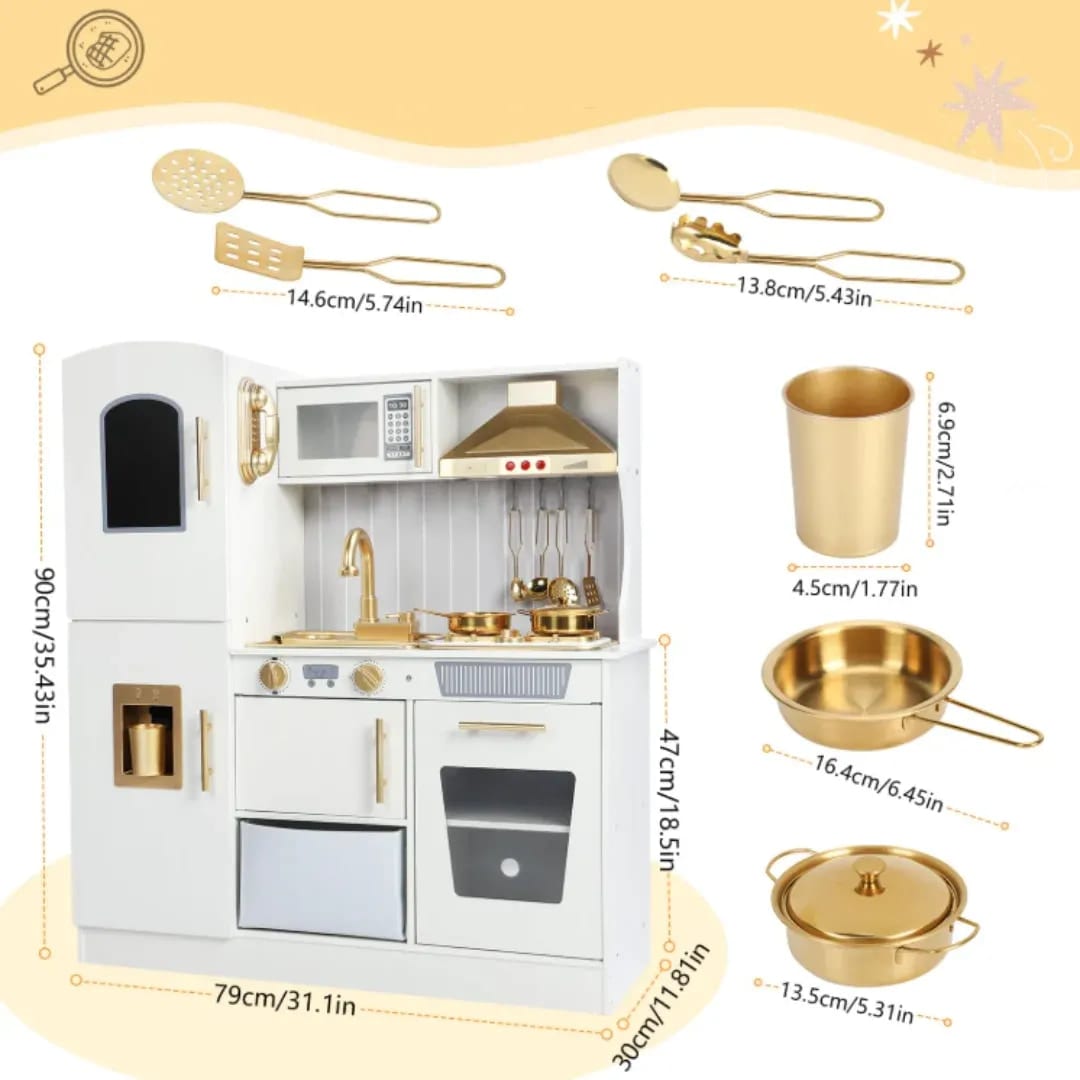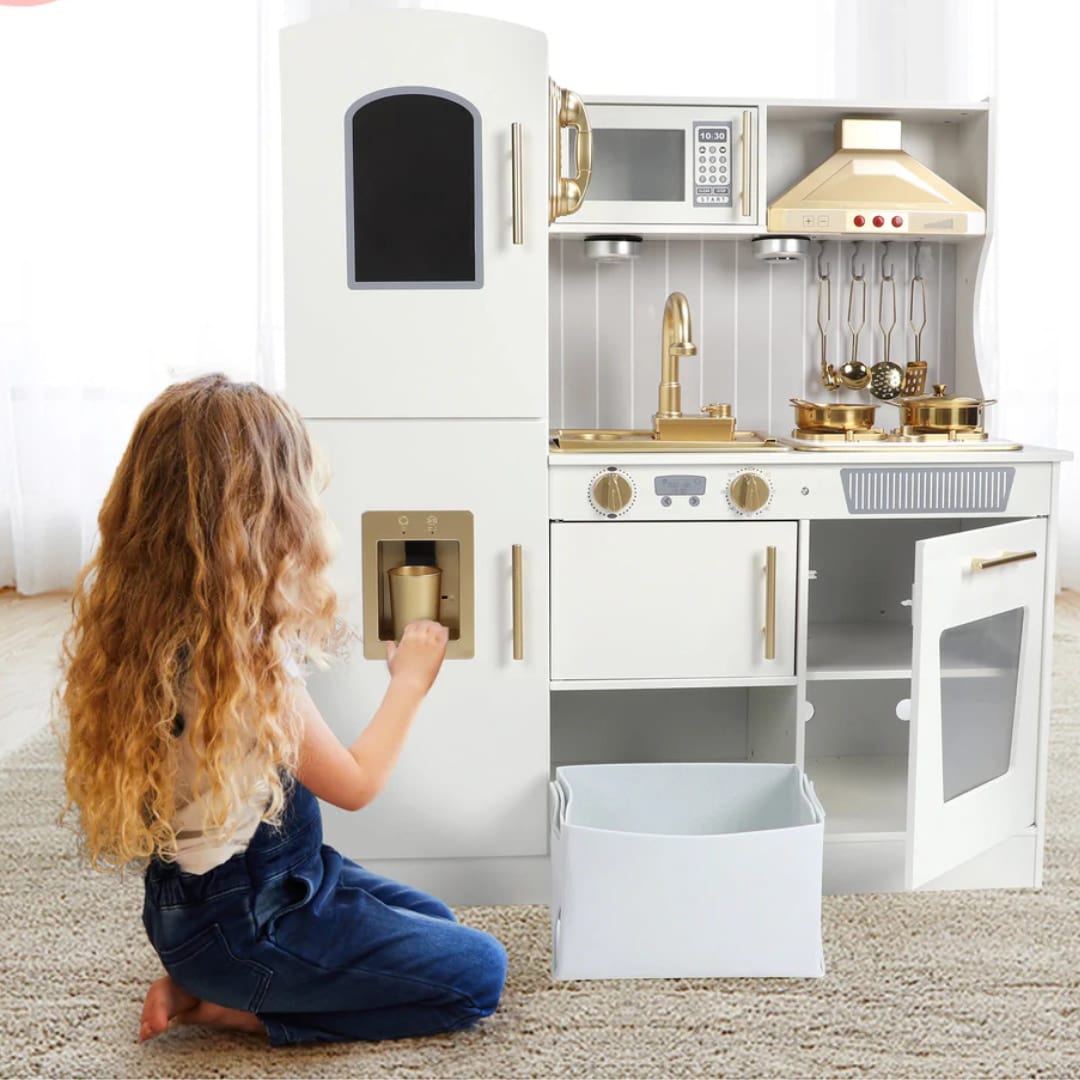
A family in Nairobi speaks English at school and Kiswahili with the grandparents. At the play kitchen, both languages can join the game, from the pot on the stove to the call that dinner is ready.
This post sets out the most useful kitchen words in English and Kiswahili, side by side, with a few phrases and a game to practise them. Print it, or keep it open on your phone beside the kitchen.
Why is a play kitchen good for learning words?
A play kitchen is good for learning words because the words are attached to things a child can hold and actions they can do. Saying "sufuria" while lifting the pot, or "stir" while stirring, links the word to the thing. The American Academy of Pediatrics describes play with a caring adult as one of the main ways children build language.
That report, The Power of Play, puts the grown-up at the centre. So the more you join in, naming things and asking questions, the more words the game carries.
Which food words can children learn at the kitchen?
The food words children can learn at the kitchen start with what the family eats every day: rice, ugali, chapati, beans and sukuma wiki. Learning them in both languages lets a child order food from a grandparent in Kiswahili and from a teacher in English. The table pairs eight everyday foods.
| English | Kiswahili |
|---|---|
| Rice (cooked) | Wali |
| Beans | Maharagwe |
| Meat | Nyama |
| Egg | Yai |
| Bread | Mkate |
| Tea | Chai |
| Milk | Maziwa |
| Water | Maji |
Some foods share a name in both languages, such as ugali, chapati and mandazi. Those make easy first words for younger children.
Which kitchen things have names in both languages?
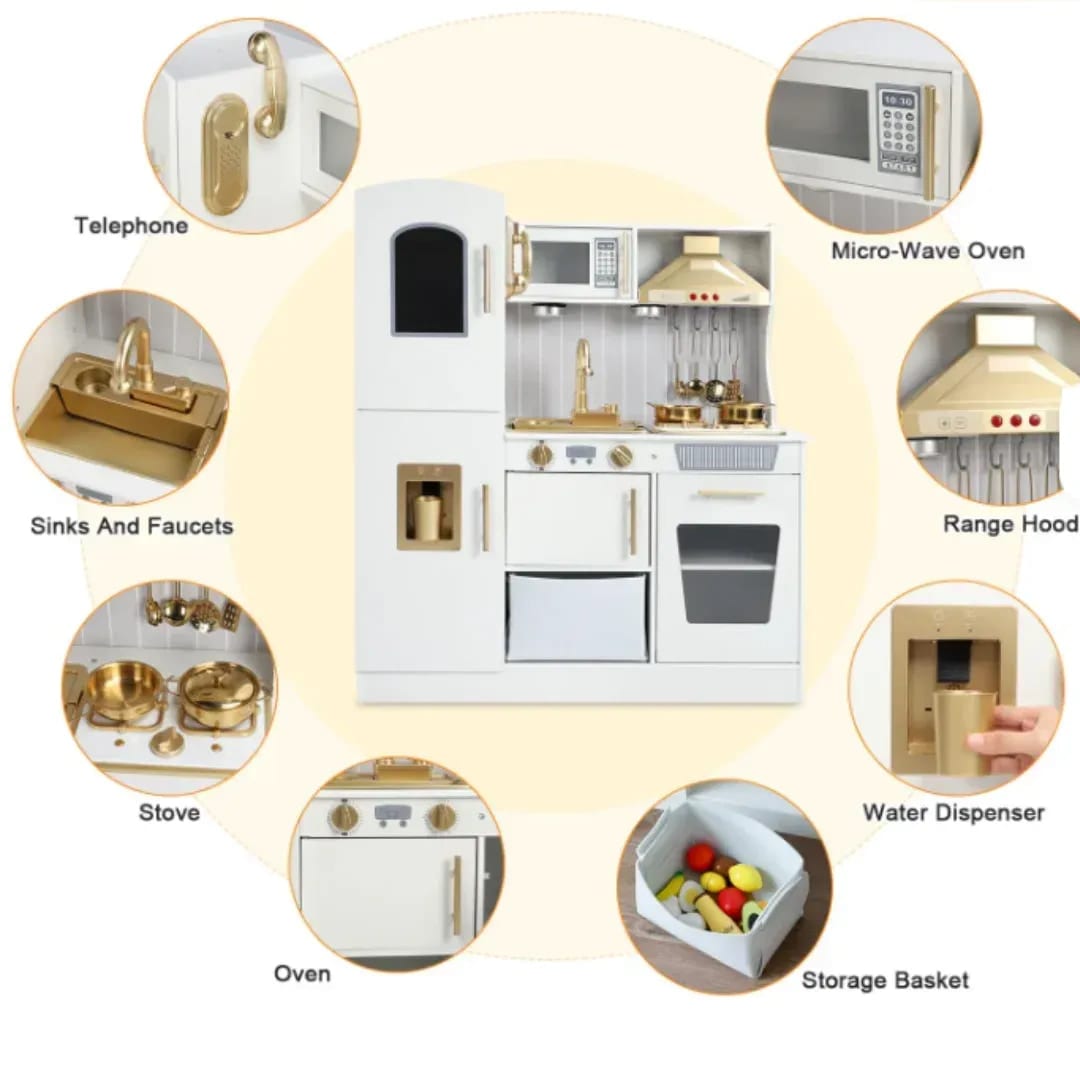
The kitchen things children use most at a play kitchen all have names in both languages, from the pot on the stove to the basket at tidy-up time. Naming each one as your child picks it up builds the words into the game. The table covers the parts and pieces that come up most often.
| English | Kiswahili |
|---|---|
| Pot | Sufuria |
| Lid | Mfuniko |
| Spoon | Kijiko |
| Plate | Sahani |
| Stove | Jiko |
| Table | Meza |
| Basket | Kikapu |
| Telephone | Simu |
What cooking words do children use while they play?
The cooking words children use while they play are action words: stir, pour, wash, eat and drink. Each one goes with a movement, so children learn it by doing it. Say the word in both languages as your child does the action, and soon they will say it themselves while they cook.
| English | Kiswahili |
|---|---|
| Cook | Pika |
| Stir | Koroga |
| Pour | Mimina |
| Wash | Osha |
| Fry | Kaanga |
| Boil | Chemsha |
| Eat | Kula |
| Drink | Kunywa |
What are useful kitchen phrases in Kiswahili?
- Karibu chakula: come and eat, welcome to the meal
- Chakula kiko tayari: the food is ready
- Unataka nini?: what would you like?
- Tafadhali: please
- Asante: thank you
- Kitamu sana: very tasty
Phrases like these turn a game into a conversation. A child who calls "Chakula kiko tayari" from the stove gets a family to the table, and an answer of "Asante" in return.
How do you play a two-language cooking game?
- Choose one language for the cook and the other for the customer.
- Let the customer order a dish, such as wali na maharagwe or rice and beans.
- Ask the cook to name each thing they use as they use it.
- Swap languages halfway through the meal.
- End by thanking the cook in both languages: asante, thank you.
Keep it light and playful. Mixing the two languages in one sentence is fine, and the game works the same way.
If your child gets stuck on a word, point to the thing and say it once more, then carry on cooking. The next time it comes up in the game, they will often say it before you do, and that small moment of remembering is worth a cheer.
Which words should you start with?
The words to start with are the ones your child can touch during the first game: the pot, the spoon, the rice and the water. Four or five words are plenty for one session. Once those come easily, add the actions, stir and pour, then the phrases that bring guests to the table.
A short list on the fridge door helps everyone in the house use the same words. An older sibling can be the teacher, which is good practice for them too.
How can grandparents join the word game?
Grandparents can join the word game by becoming the customer who orders only in Kiswahili, or in the family's mother tongue. The child has to listen, understand the order and answer, which turns a visit into a word game. It also gives a grandparent a special part in the game.
If a grandparent speaks a language other than Kiswahili or English, add a third column to your list. The kitchen game works just as well in Kikuyu, Dholuo, Kalenjin, Luhya or any language spoken at home.
Counting in English and Kiswahili
Counting fits easily into the cooking. Scoop rice into the pot in Kiswahili, moja, mbili, tatu, nne, tano, then serve the plates in English, one to five. The full set from one to ten runs moja, mbili, tatu, nne, tano, sita, saba, nane, tisa, kumi.
For more number games, see our post on teaching numbers and money with a play kitchen.
Frequently asked questions
What is the Kiswahili word for kitchen? The Kiswahili word for kitchen is jiko, which also means stove. Jikoni means "in the kitchen".
How do you say cook in Kiswahili? Cook in Kiswahili is pika, and "to cook" is kupika. A cook is mpishi.
Should I speak Kiswahili or English during pretend play? Kiswahili, English or both all work during pretend play. Use the languages your family speaks, and let the game carry the words.
What kitchen words should a 3-year-old learn first? A 3-year-old's first kitchen words are the everyday ones they can point to: pot, spoon, cup, water, rice and eat, in whichever languages the family uses.
How do I teach English food words to a child who speaks Kiswahili at home? Teaching English food words to a child who speaks Kiswahili at home works best one word at a time. Say the Kiswahili word, then the English, while your child holds the food.
What is the Kiswahili for spoon and pot? The Kiswahili for spoon is kijiko, and the word for pot is sufuria. Both come up in almost every pretend meal.
Can a play kitchen help with pre-primary language activities? A play kitchen can help with the pre-primary Language Activities in KICD's curriculum designs by giving children words to use in play. Our page on play kitchens for schools explains how teachers use one.
What is a good first Kiswahili phrase to teach at the play kitchen? A good first Kiswahili phrase to teach at the play kitchen is "Karibu chakula", which welcomes everyone to the meal. It is easy to call from the stove.
How do you say I am hungry in Kiswahili? To say "I am hungry" in Kiswahili, you say "nina njaa". A guest at the play kitchen can say it to start the game, and the cook answers by serving a plate.
How do you say you are welcome in Kiswahili? To say "you are welcome" in Kiswahili, you say "karibu", which also means welcome at the door. At the play kitchen, the cook can say it to each guest as they sit down, and again after the guest says asante.