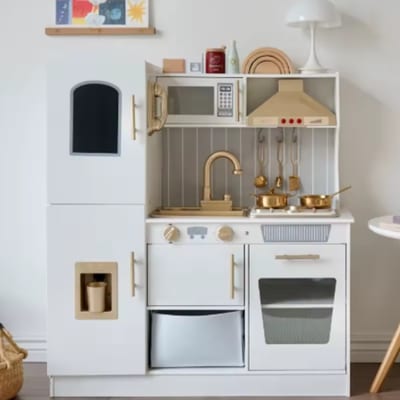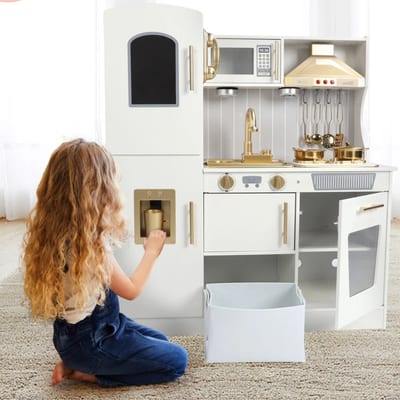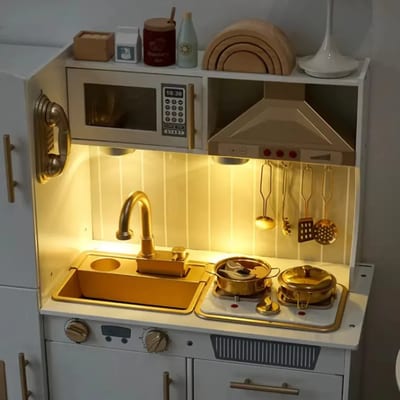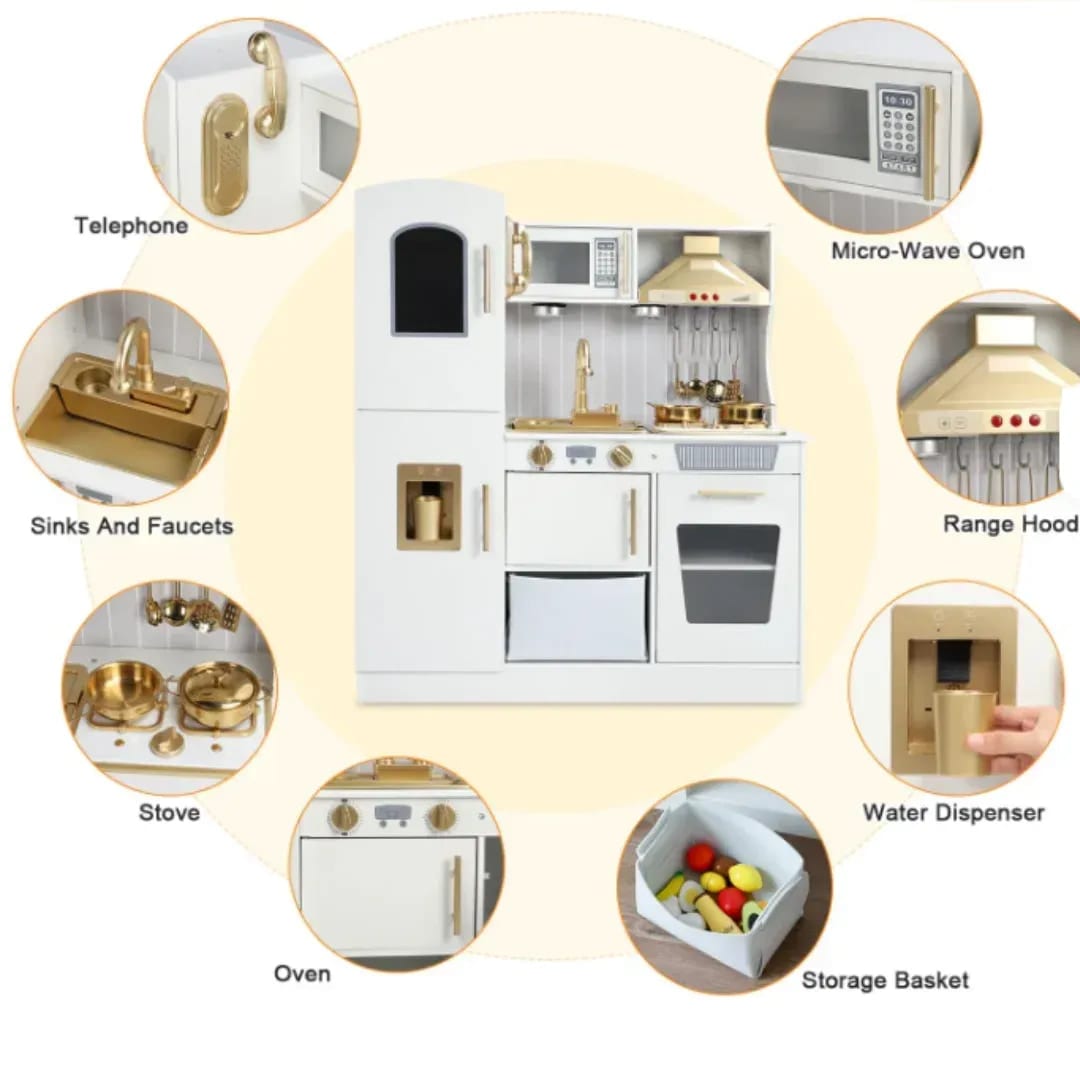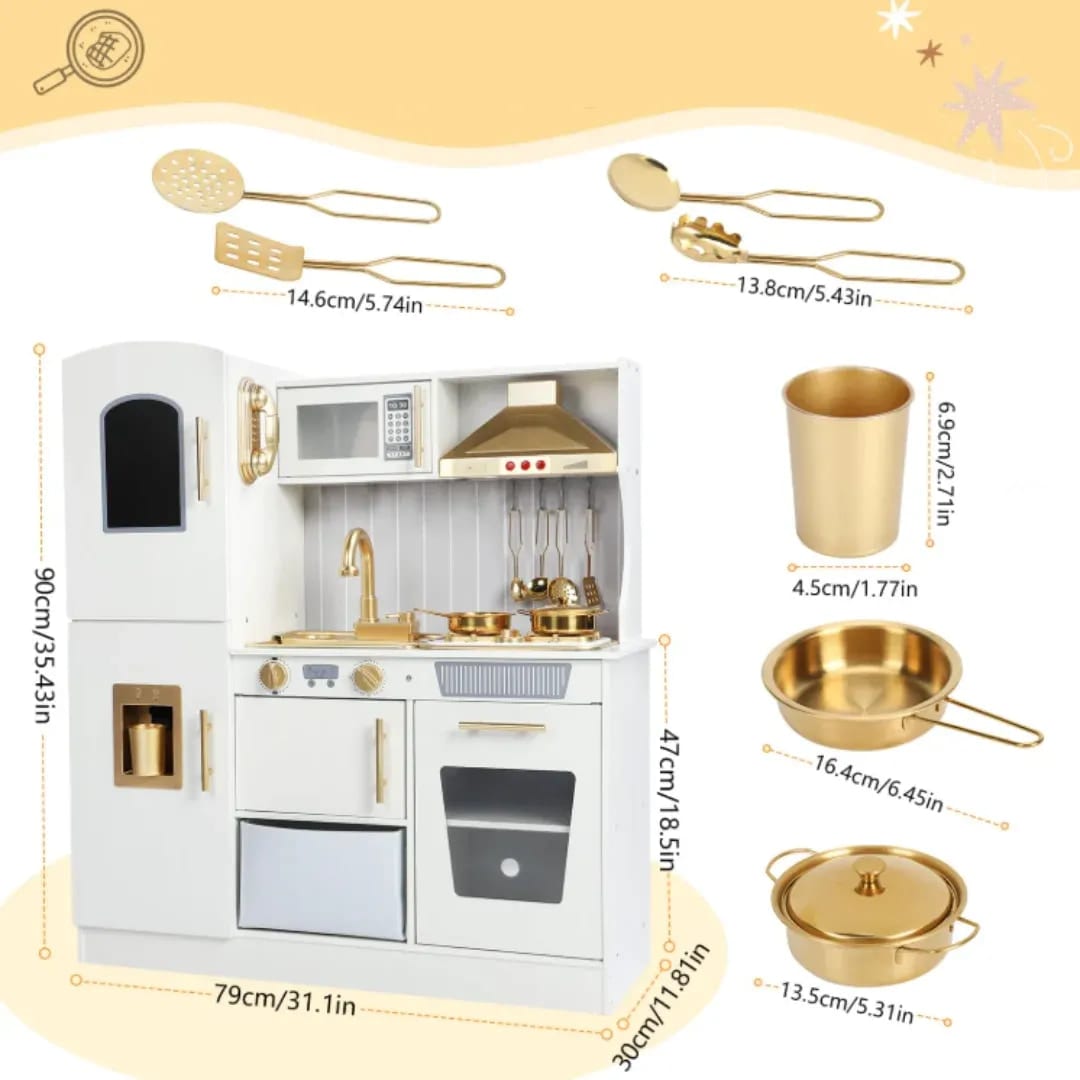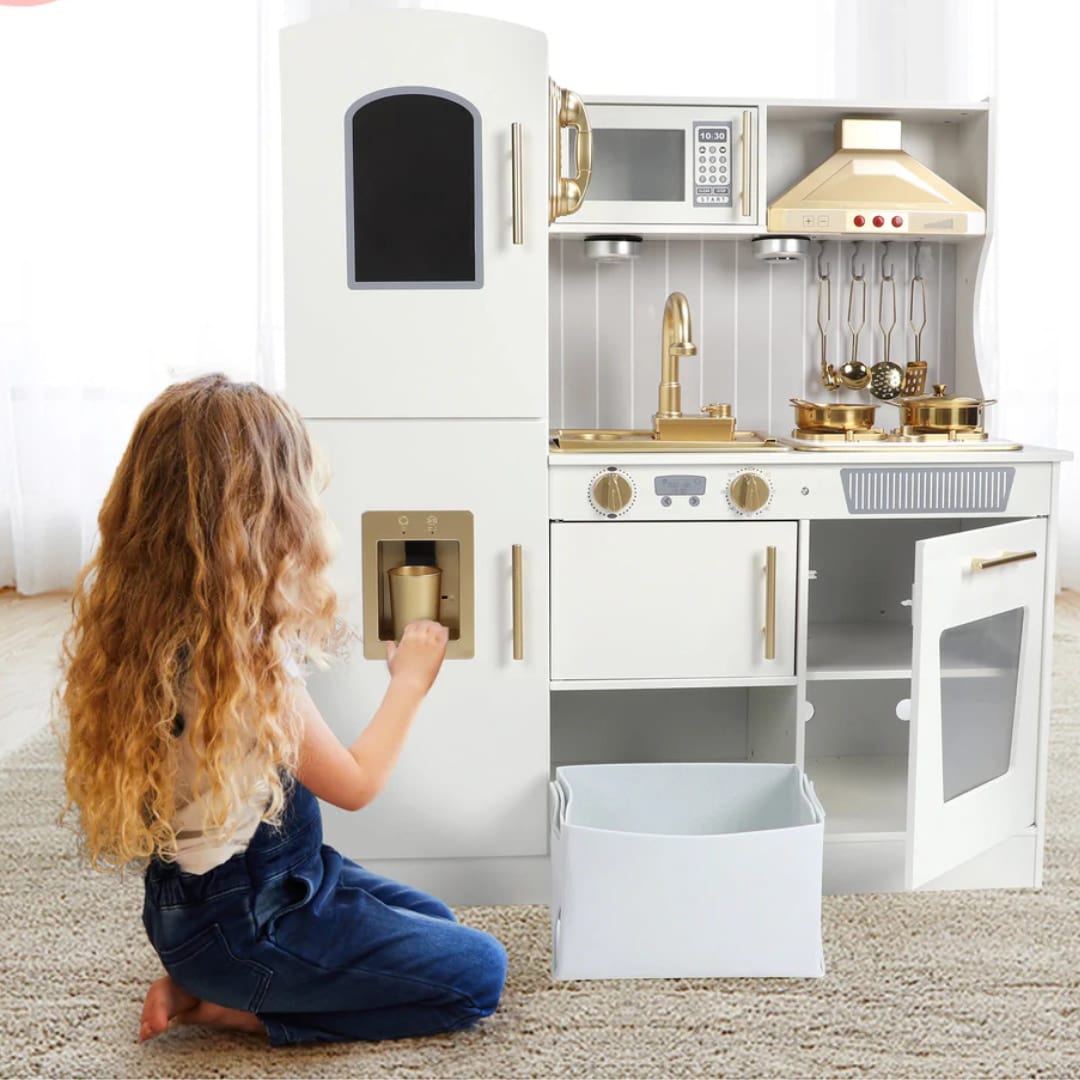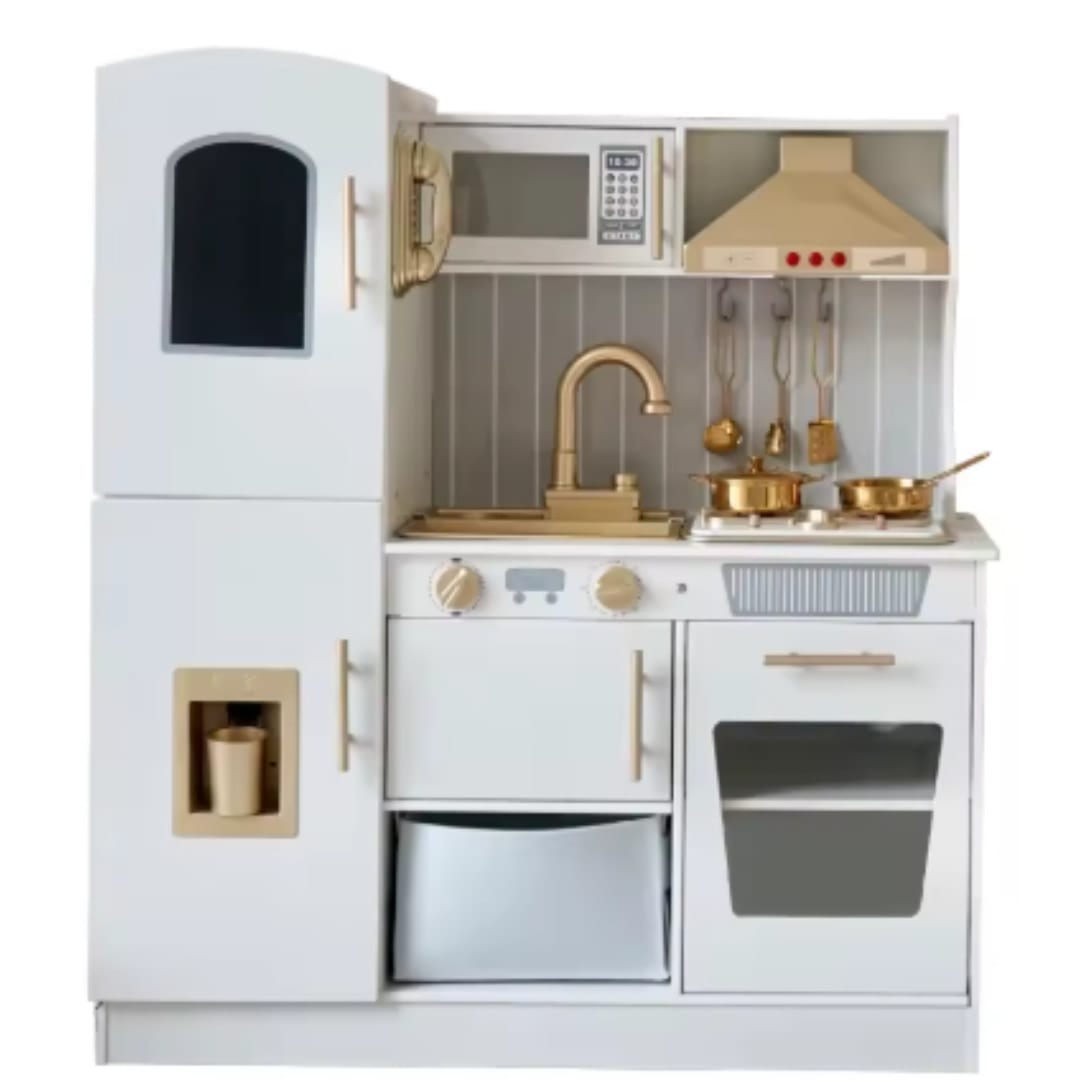
A mother in Kitengela sees her 4-year-old reach towards the pot on the real jiko. She decides to teach the lesson as a game at the play kitchen, where nothing is hot or sharp.
The American Academy of Pediatrics describes pretend play in The Power of Play as a way children practise language and problem-solving. This post uses the same kind of play to practise kitchen habits, with short games you can play in a few minutes.
Why teach kitchen safety through pretend play?
Teaching kitchen safety through pretend play works well because children can practise a habit before they need it, in a kitchen with nothing hot or sharp. A pot handle left sticking out at the play stove is just part of the game. Later, at the real stove, you can remind your child of a habit they have already practised.
It also keeps the lessons positive. Your child learns a set of things good cooks always do, and enjoys being the one who remembers them.
What safety habits can children practise at a play kitchen?
- Saying "hot, stop" and waiting before touching the stove or oven
- Turning pot handles in, away from the edge of the counter
- Washing hands before cooking and after touching raw food
- Wiping up spills straight away, so nobody slips
- Leaving knives and hot pans to the grown-up cook
- Calling a grown-up when something is hot, sharp or broken
Each habit on the list has a game below. Practise one at a time, and come back to the earlier ones now and then.
Which game goes with each safety lesson?
Each safety lesson has a matching game at the pretend kitchen, and a habit to use at the real one. Playing the game first makes the habit familiar, so it feels natural when it matters. The table pairs six lessons with a game and the real-kitchen habit each one builds towards.
| Safety lesson | Pretend kitchen game | Real-kitchen habit |
|---|---|---|
| Hot means stop | The hot stove game | Waiting for a grown-up near the jiko |
| Handles in | Turn the handle before you stir | Pot handles away from the edge |
| Clean hands | Wash at the sink before cooking | Handwashing before helping |
| Spills get wiped | Clean-up crew after the meal | Wiping up water and food at once |
| Grown-ups do the sharp jobs | Ask the head chef to chop | Leaving knives to adults |
| Call for help | Ring the kitchen phone for the grown-up | Calling an adult when something is wrong |
How do you play the hot stove game?
- Tell your child the play stove is "on" and very hot today.
- Ask them to hold their hands up and say "hot, stop" before stirring.
- Let them stir only with the spoon, never with fingers.
- Pretend to turn the stove "off" and count to five to let it cool.
- Praise them every time they remember the rule.
Play it a few times a week for the first month. Then, at the real jiko, the words "hot, stop" are already theirs.
How do you teach handwashing before cooking?
- Start every pretend meal at the sink.
- Pretend to turn on the tap and rub hands together, front and back.
- Count slowly to 20 while rubbing, or sing a short song.
- Dry hands on a small towel beside the kitchen.
- Start cooking once hands are dry.
Do the same at the real sink before your child helps with real food. The CDC's handwashing guidance recommends scrubbing for at least 20 seconds, which is about the time it takes to hum "Happy Birthday" twice.
Why start with the hot stove habit?
The hot stove habit is the one to start with because the stove is the hottest part of any kitchen, and the World Health Organization's fact sheet on burns notes that burns happen mainly at home and at work. A child who already says "hot, stop" brings a useful habit to the real jiko.
At the real stove, back the game up with your own habits: handles turned in, pots on the back burners and a grown-up at the cooker whenever it is on.
Which safety words should a young child know?
The safety words a young child should know are short and easy to shout: hot, stop, wait, sharp and help. Each one is a signal to pause and look for a grown-up. Use the same words every time, at the play kitchen and the real one, so they mean the same thing in both places.
In Kiswahili, the same words work just as well: moto, simama, ngoja, kali and msaada. Teach whichever language your child uses most at home, or both.
When can children help in the real kitchen?
Children can help in the real kitchen with a grown-up beside them once they have practised the habits in play, starting with jobs away from the heat. Washing vegetables, stirring cold mixtures and setting the table come first. Our post on simple recipes to cook with preschoolers lists jobs for each age.
At the play kitchen, your child can do every job, while you keep the hot ones at the real jiko.
Frequently asked questions
At what age can children learn kitchen safety? Children can start learning kitchen safety as soon as they enjoy pretend cooking, with simple habits like "hot, stop". More habits can follow as they grow.
How do I teach my child that the stove is hot? Teaching your child that the stove is hot works best as a game at the play kitchen: the stove is "on", hands go up and the child says "hot, stop" before stirring with the spoon.
How do I teach knife safety through play? Knife safety through play starts with one rule: real knives belong to grown-ups. In the game, the child asks the "head chef" to do the chopping, and practises the same request in the real kitchen.
How do I explain fire safety to a 4-year-old? Explaining fire safety to a 4-year-old works best with a few short rules said the same way every time: hot means stop, grown-ups light the jiko, and call a grown-up if something smells of burning.
What words should a child say at the hot stove? The words a child should say at the hot stove are "hot, stop", said out loud before reaching for anything. Short words are easy to remember in the moment.
Does pretend play make the real kitchen safer? Pretend play can help you build safe habits when the same words and steps are used in both places. The game is the practice, and you use the habit together at the real stove.
How do I teach my child to stay back from the real oven? Teaching your child to stay back from the real oven starts with a spot on the floor where they stand while you open it. Practise the same spot at the play oven first.
What should children do if something spills in the kitchen? When something spills in the kitchen, children should stop, tell a grown-up and help wipe it up with a cloth. Practising this at the play kitchen turns it into a habit.