A mother in Embakasi hears the same request every evening: "Can I have the phone?" This post is for her, with what the health bodies advise and a gentle plan for swapping screens for play, one part of the day at a time.
Children can play pretend games, build, draw, read with a grown-up, help with chores and play outside instead. Each swap gives the hour a phone or TV would have filled to something your child does with their hands, body or imagination.
How much screen time is right for young children?
The right amount of screen time for young children is small. The World Health Organization advises no sitting screen time for babies under 1, none for 1-year-olds, and no more than one hour a day for ages 2 to 4, with less being better. The American Academy of Pediatrics gives similar advice for ages 2 to 5.
The WHO guidance is in its guidelines on physical activity, sedentary behaviour and sleep for children under 5. The AAP's statement, Media and Young Minds, adds that young children get the most from programmes when a grown-up watches with them and talks about what they see.
Why is it worth cutting screen time?
Cutting screen time is worth it because the hours go to the things young children need most: moving, playing, talking and sleeping. The WHO's guidance for under-fives sets screen time limits alongside daily active play and enough sleep, because the three share the same hours. Less time on a screen leaves more for the others.
It also frees time for conversation. The AAP notes that young children learn language best from real back-and-forth talk with people, which a screen can't give in the same way.
How do you swap screen time for play gently?
- Notice when screens are used most, such as after school or while dinner cooks.
- Pick one of those times to change first, not all of them at once.
- Set up a screen-free activity before that time comes, so it is ready.
- Join in for the first few minutes, then step back.
- Keep the same swap every day for a week before adding another.
- Agree simple family rules, such as no screens at meals.
Going slowly is easier on everyone than a sudden ban. Each small change becomes part of the routine before the next one begins.
What can children do instead of screens at each time of day?
What children can do instead of screens depends on the time of day, because energy and attention change from morning to evening. Active play suits the morning, quiet play suits the time while dinner cooks, and books suit bedtime. The table gives a swap for each part of a usual day at home.
| Time of day | Instead of a screen | What to set up |
|---|---|---|
| Early morning | Drawing or a puzzle | Paper and crayons on the table |
| After school | Outdoor play or a walk | Shoes by the door, a ball |
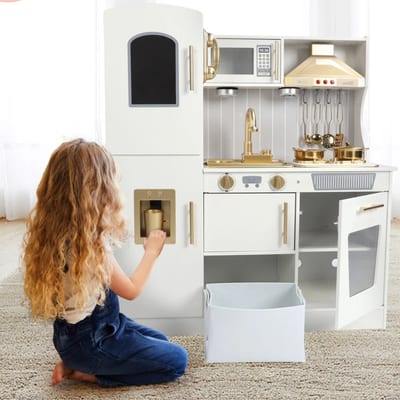
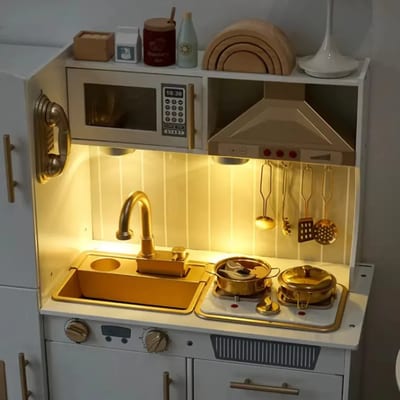
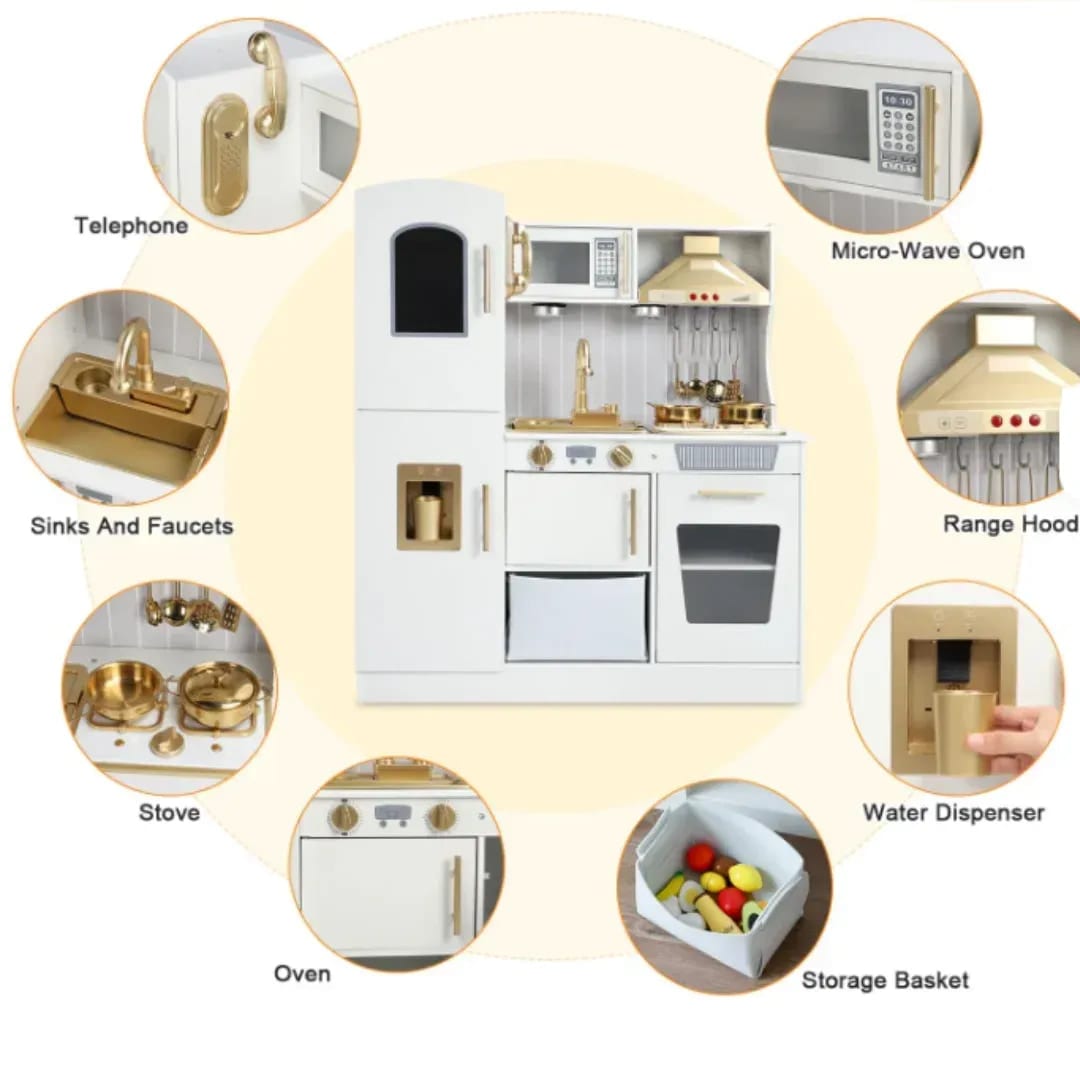
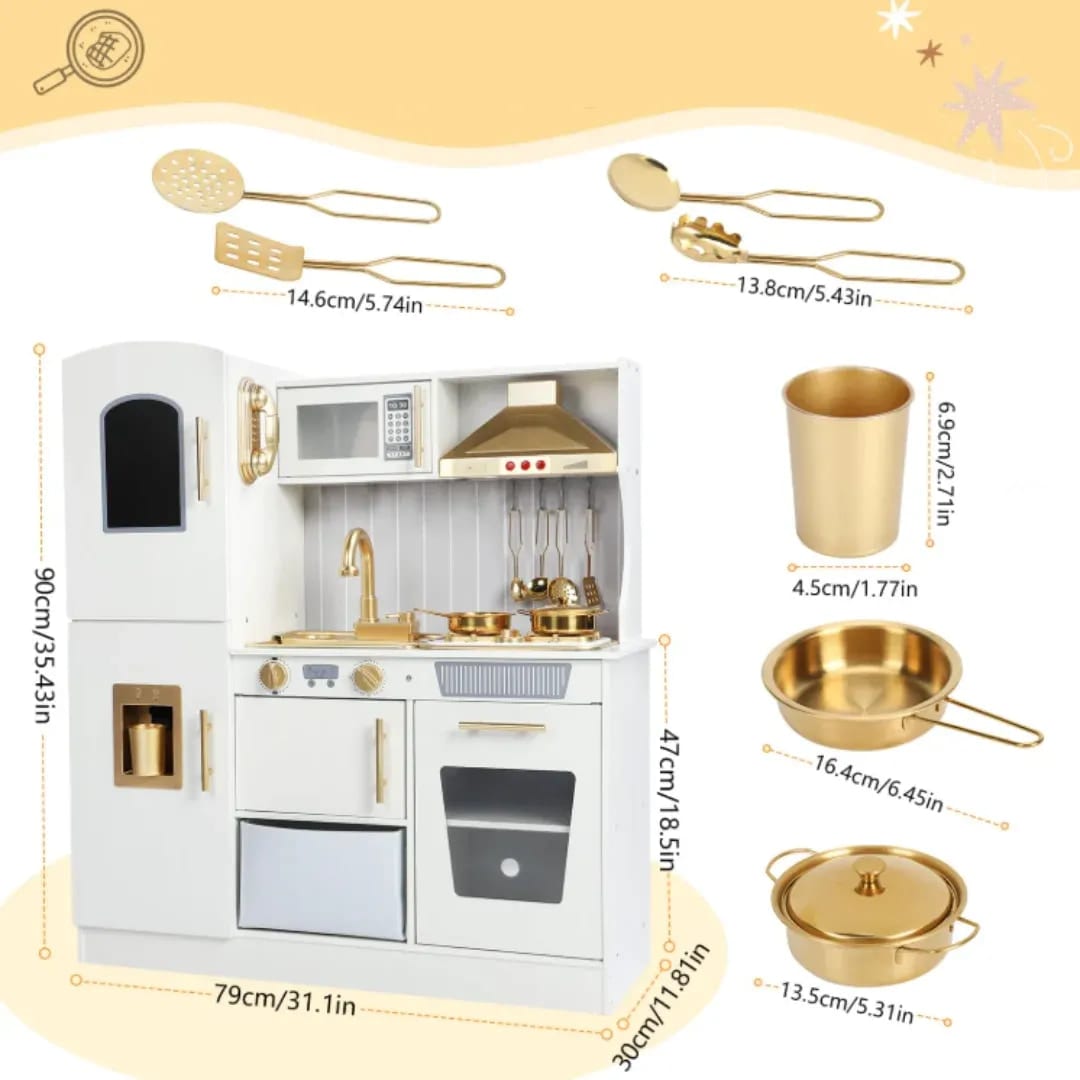
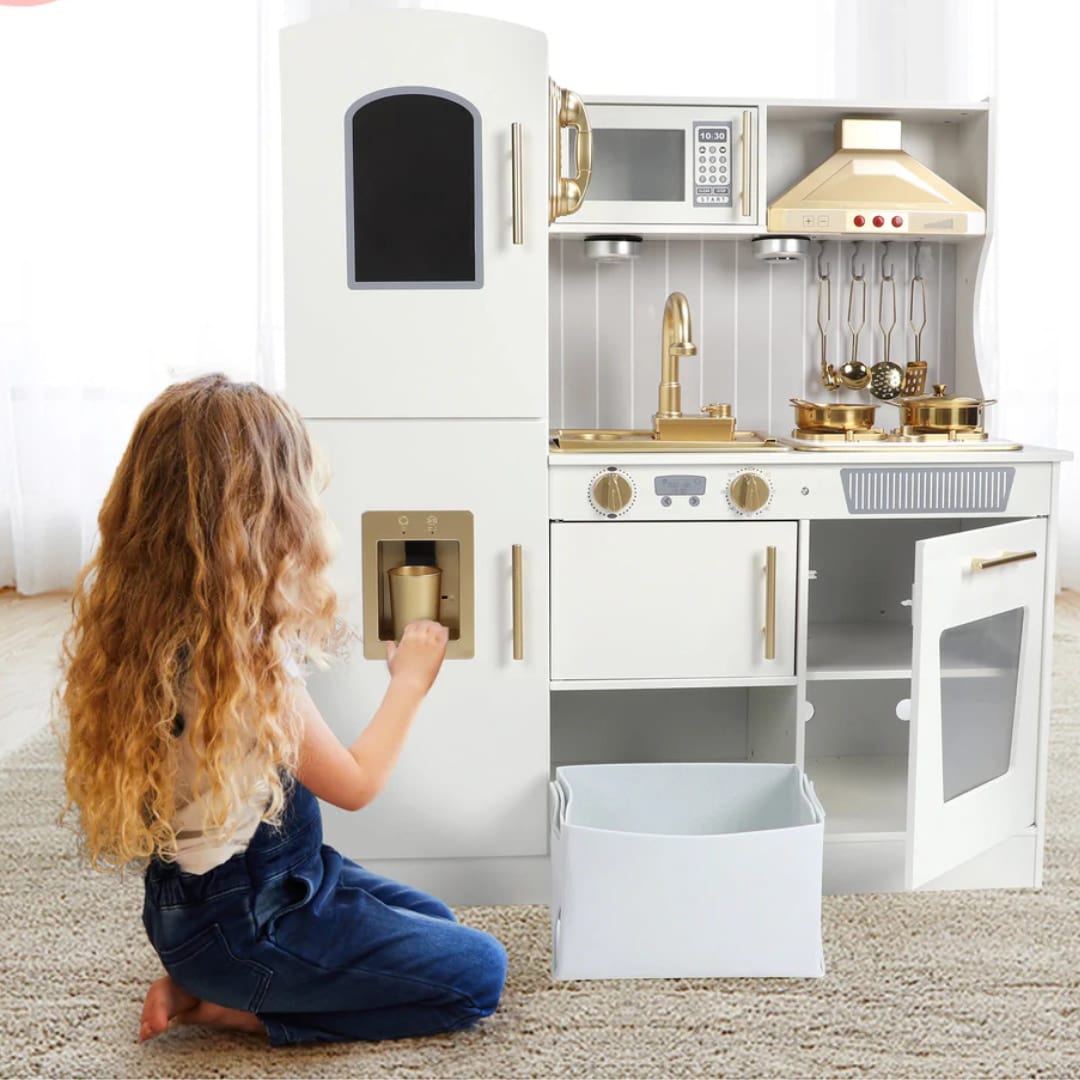
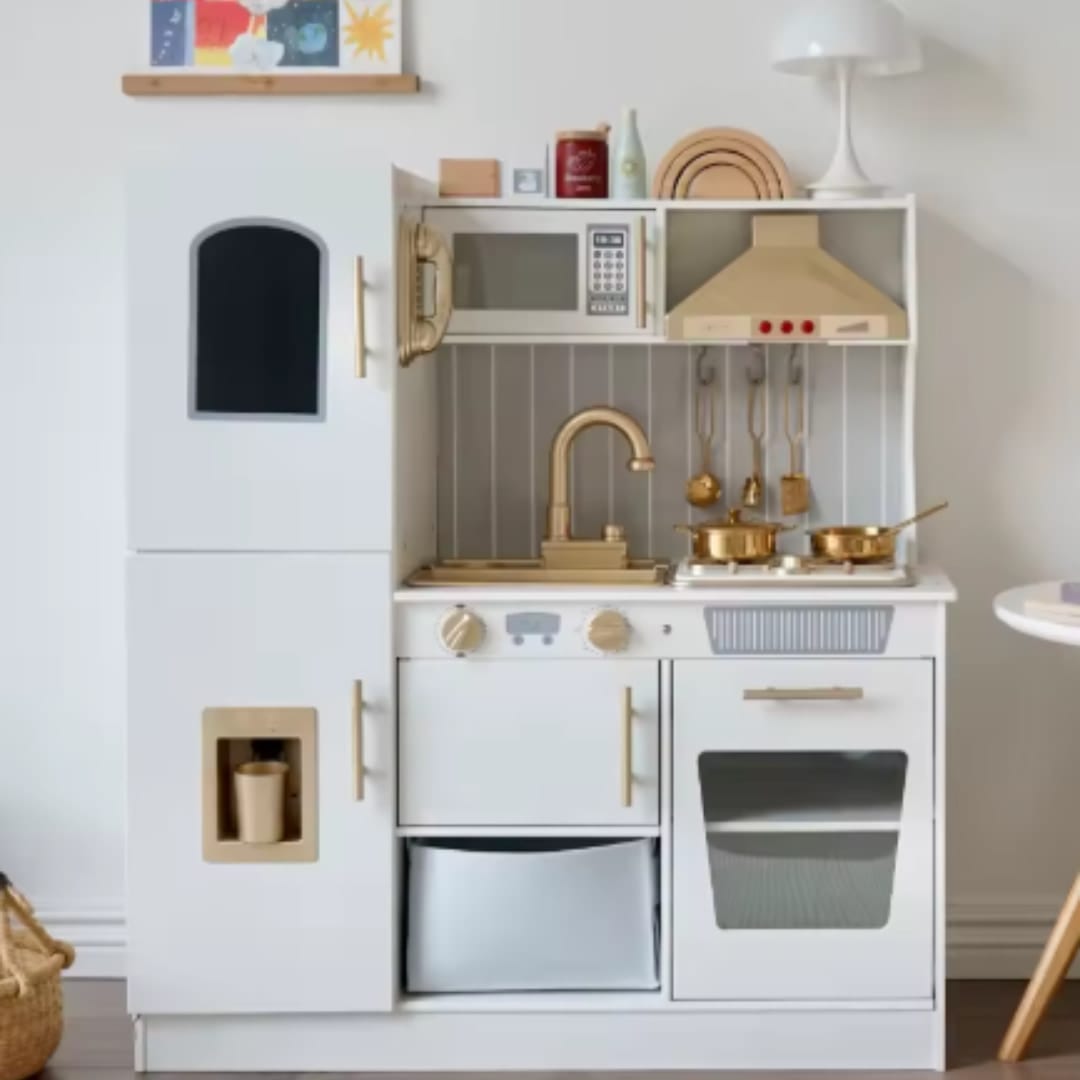
| While dinner cooks | A pretend meal at the play kitchen | Play food set out on the counter |
| After dinner | Blocks or a building game | A box on a low shelf |
| Bedtime | Reading together | Two or three books by the bed |
What are good screen-free activities at home in Kenya?
- Pretend cooking at a play kitchen, from chai to pilau
- Building with blocks and boxes
- Drawing and colouring at the dining table
- Reading picture books in English and Kiswahili
- Helping with real chores, such as sorting socks or watering plants
- Dancing to music on the radio
- Playing outside: skipping, ball games or a walk to the shops
Most of these need nothing new. A box of crayons, a pile of old magazines or a basket of laundry to sort can fill an afternoon.
Why does a play kitchen work well as a screen-free activity?
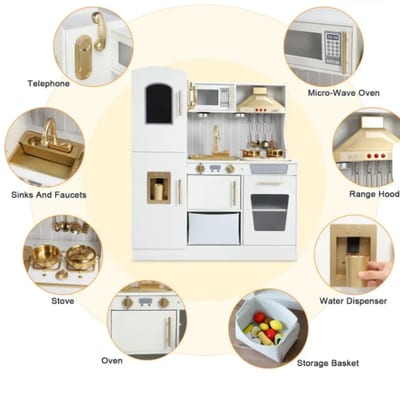
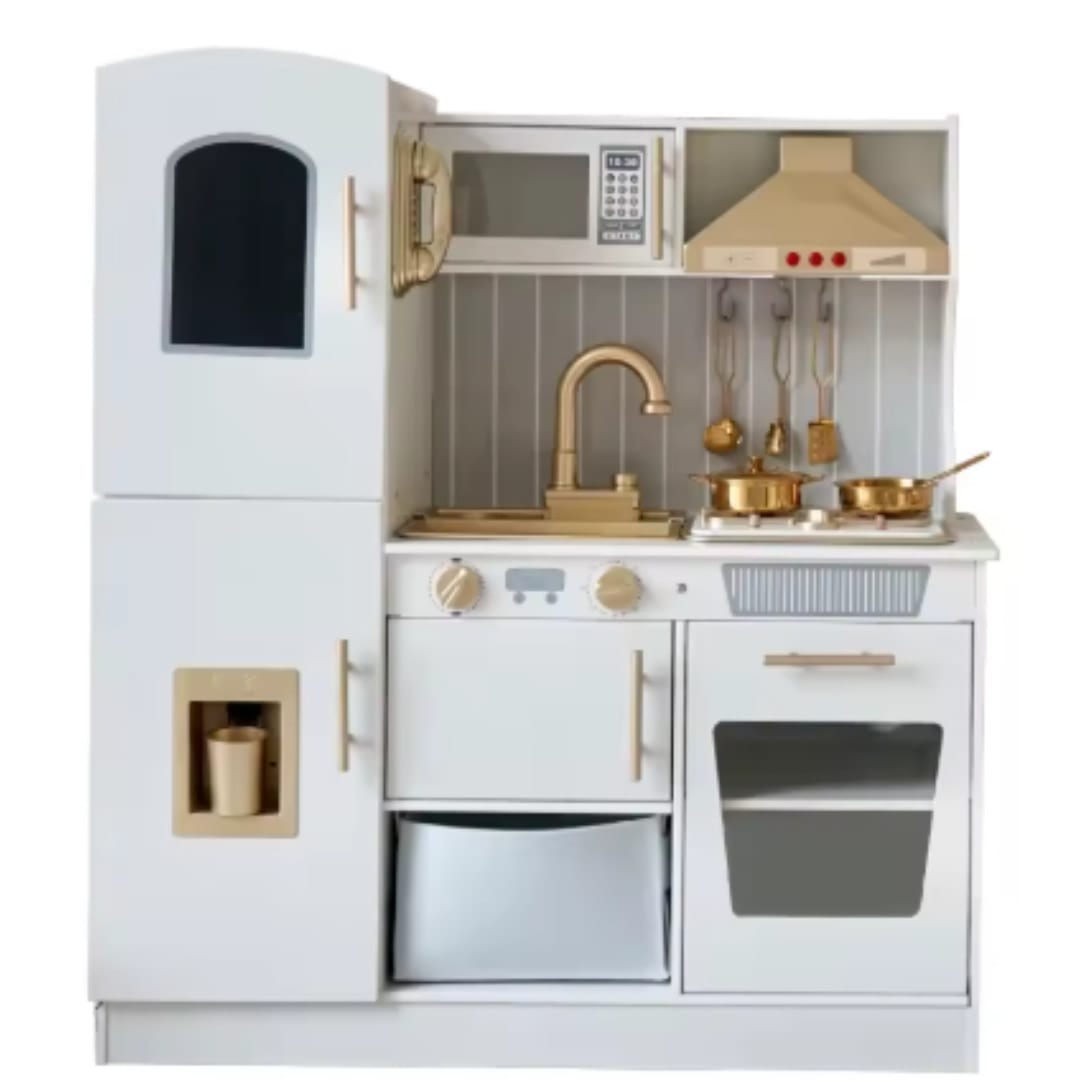
A play kitchen works well as a screen-free activity because it holds many games in one place, and children can play at it alone or with others. Placed where the family spends the evening, it is ready whenever the wish for a screen comes along.
Our list of 30 play kitchen games gives you a new idea for every day of the month.
What does the first screen-free week look like?
The first screen-free week can bring some asking for the phone before the new activity settles into the routine. Keep the swap the same each day, keep the alternative ready before the usual screen time, and stay close for the first few minutes. Keeping the swap the same each day is the main thing.
A little boredom is fine. Ten quiet minutes can end with a new story at the kitchen or a tower of blocks on the floor.
At the end of the week, notice what changed. A calmer evening or an extra half hour of play is worth keeping, and it is a good reason to choose the next swap.
What about screens for older children?
Screens for older children need clear, steady limits rather than a ban, according to the American Academy of Pediatrics. For children of 6 and over, the AAP suggests the family agrees how much time, which content and which places are screen-free, so screens don't push out sleep, play and homework.
The AAP's Family Media Plan is a free tool for writing those rules down together.
Frequently asked questions
How much screen time should a 3-year-old have? A 3-year-old should have no more than one hour of sitting screen time a day, according to the World Health Organization, and less is better.
Is screen time recommended for children under 2? Screen time for children under 2 is not recommended by the WHO. The American Academy of Pediatrics makes one exception: video calls with family.
What can I give my child instead of a phone? Instead of a phone, give your child something to do with their hands: a play kitchen, blocks, crayons and paper, or a simple chore like sorting spoons.
How do I handle my child asking for the phone? Handling a child asking for the phone is easier with a ready alternative and a calm, repeated answer: "Not now, let's cook dinner together."
Are educational apps good for preschoolers? Educational apps for preschoolers are best kept to short, high-quality programmes watched with a grown-up, as the American Academy of Pediatrics advises.
What screen-free activities suit a child after school? Screen-free activities that suit a child after school are active ones: outdoor play, a walk, a ball game or helping to water the plants.
Can a play kitchen help reduce screen time? A play kitchen can help reduce screen time by giving your child an inviting game to choose instead, especially during the hour while dinner cooks.
Should parents cut their own screen time too? Parents cutting their own screen time helps, because children copy what they see. The AAP suggests the whole family follows the same simple rules.
What screen-free activities suit a long car or matatu ride? Screen-free activities that suit a long car or matatu ride are talking games: I spy, counting red cars, naming animals and singing songs together. A small bag with a book and crayons is useful too.
What screen-free activities suit a grandparent's visit? Screen-free activities that suit a grandparent's visit are stories, songs and cooking games where the grandparent is the guest. Your child can serve a pretend meal and ask what the grandparent ate as a child.